10 Best Agricultural Drones for Efficient Farming Solutions?
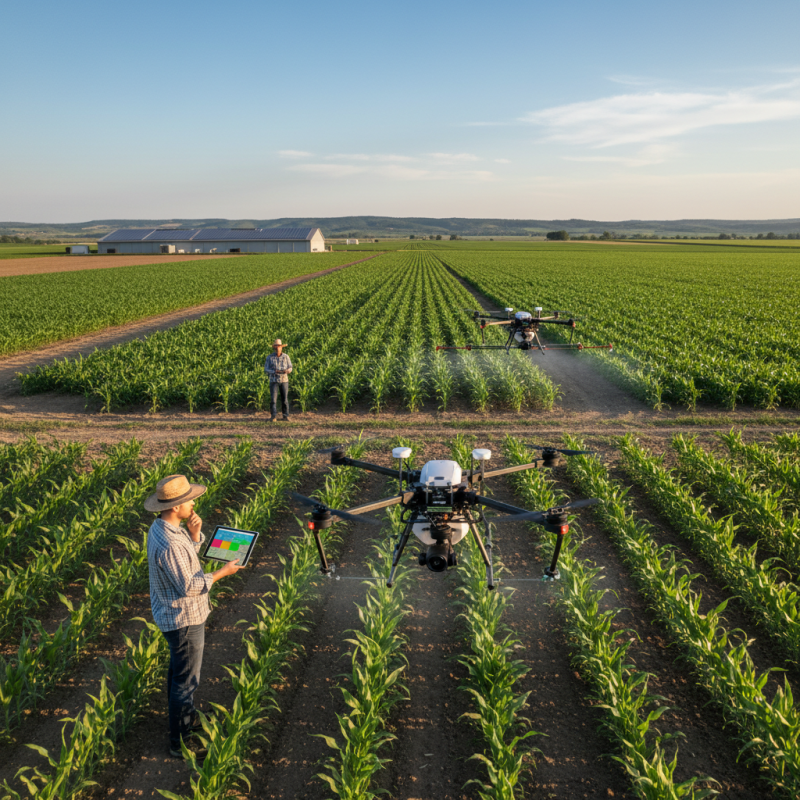
In recent years, Agricultural Drones have transformed farming practices. These innovative tools provide farmers with efficient solutions for monitoring crops, optimizing resources, and increasing yields. By leveraging advanced technology, agricultural drones enable precise data collection and analysis.
Farmers can capture high-resolution images of their fields. This allows for better understanding of crop health. However, it’s important to note that operating these drones requires training and knowledge. Many farmers may struggle with maintaining the equipment or interpreting data correctly.
Additionally, while drones can save time, their initial cost can be a barrier for some. This means not every farmer has access to this technology. Ultimately, while agricultural drones hold great promise, they also bring challenges that require consideration and reflection.
Overview of Agricultural Drones and Their Benefits in Farming
Agricultural drones are changing modern farming practices. These innovative tools offer precision and efficiency. They collect data on crop health, monitor soil conditions, and optimize water usage. With aerial imagery, farmers can identify problem areas quickly. This technology enables timely interventions, potentially saving crops from disease and pests.
Farmers benefit from reduced labor costs and enhanced productivity. Drones can cover vast areas in a fraction of the time required for manual checks. They reduce the need for chemical applications, allowing for environmentally friendly practices.
However, there are challenges to consider. Some farmers may lack the technical skills needed for drone operation. There are also costs associated with purchasing and maintaining this equipment.
Despite these hurdles, the overall potential of agricultural drones is significant. They provide data that empowers farmers to make informed decisions. As technology evolves, these tools will likely become more accessible and user-friendly. Continuous learning is essential for farmers to keep pace with these advancements. Embracing this technology could lead to more sustainable and efficient farming practices.
Key Features to Consider When Choosing Agricultural Drones
When selecting agricultural drones, several key features should be prioritized to meet farming needs effectively. First, consider the camera quality. High-resolution cameras improve crop monitoring. Multispectral cameras can detect plant health, offering a deeper insight into soil conditions. This data is crucial for timely interventions.
Battery life is another critical aspect. Longer flight times enable larger field coverage in a single operation. Farmers can analyze more land without frequent recharges. Additionally, durability matters. Drones should withstand harsh weather conditions like rain or wind. Equipment breakdowns can lead to lost time and resources.
User-friendliness is essential as well. Some drones come with complex software that may require advanced training. A simpler interface can help farmers focus on their core activities. It's worth noting that while drones offer many advantages, they also present challenges. Regulatory compliance and maintenance need attention to avoid issues. Hence, weighing these elements carefully is vital before making a purchase decision.
Top 10 Agricultural Drones for Precision Farming and Crop Management
Agricultural drones have transformed farming practices, enabling farmers to achieve precision in crop management. These cutting-edge tools gather data rapidly, providing insights that enhance decision-making. Equipped with high-resolution cameras and sensors, they can monitor crop health, track irrigation, and assess soil conditions.
Farmers use drones to create detailed maps of their fields. This process helps identify areas needing attention. Photos captured from various angles reveal crop stress earlier than traditional methods. However, despite their advantages, not every drone does the job effectively.
Battery life and payload capacity can vary widely. Furthermore, soil variability in different regions can affect the data accuracy of drone-based assessments.
Implementing drone technology does require training and skill. Not all farmers feel comfortable adopting new technology. A learning curve exists, making it crucial for farmers to seek guidance. It’s also essential to stay updated on advancements in drone technology and regulations. The potential benefits are significant, yet cautious adoption remains vital. Each farm presents unique challenges, and one solution doesn’t fit all. Balancing innovation with traditional methods might be the key to successful implementation.
Comparative Analysis of Pricing and Performance of Leading Drones
Agricultural drones have revolutionized the farming landscape. These high-tech tools enhance crop monitoring and precision agriculture. Reports show that the global agricultural drone market is expected to reach $6.3 billion by 2025, reflecting a significant growth in adoption.
When analyzing pricing, the cost of agricultural drones can vary widely. Basic models may start around $1,000, while advanced units can exceed $20,000. This disparity often reflects enhancements in imaging technology and data processing capabilities. Many farmers face challenges in selecting a drone that balances cost and performance effectively. Some may invest heavily in features they do not use, leading to financial inefficiencies.
Performance metrics include flight time, payload capacity, and data accuracy. Data from leading industry studies indicate that drones with longer battery life provide a distinct advantage. They allow for extended surveying of vast fields. Yet, some drones may struggle with data integration, leaving farmers with incomplete information. The relationship between price and performance remains complex. Farmers must carefully consider their specific needs before making a purchase. Drones not only promise efficiency but also push for a reevaluation of traditional farming methods.
10 Best Agricultural Drones for Efficient Farming Solutions
| Model | Price ($) | Flight Time (mins) | Max Range (km) | Payload Capacity (kg) | Camera Quality (MP) |
| Model A | 1200 | 25 | 5 | 1.5 | 12 |
| Model B | 1500 | 30 | 8 | 3 | 16 |
| Model C | 1700 | 28 | 6 | 2.5 | 20 |
| Model D | 2000 | 35 | 12 | 4 | 24 |
| Model E | 950 | 20 | 4 | 1 | 10 |
| Model F | 1300 | 22 | 7 | 2 | 14 |
| Model G | 1600 | 33 | 10 | 3.5 | 18 |
| Model H | 1850 | 29 | 9 | 3 | 22 |
| Model I | 1100 | 18 | 3 | 0.8 | 8 |
| Model J | 1450 | 27 | 11 | 4.5 | 19 |
Future Trends in Agricultural Drone Technology and Innovations
The future of agricultural drone technology is bright, showcasing numerous innovations that revolutionize farming. Drones are becoming essential tools for precision agriculture. They provide high-resolution aerial imagery, enabling farmers to monitor crop health and soil conditions effectively. Advances in sensors and imaging technology enhance data accuracy, allowing for timely interventions.
Autonomous drones may soon manage tasks like planting and fertilization. They promise to reduce labor costs and increase efficiency. However, concerns over data privacy and sound regulatory frameworks persist. Balancing innovation with responsible usage remains a crucial challenge. Farmers must approach these technologies with a critical mindset, ensuring they understand the implications of reliance on automation.
Emerging trends include artificial intelligence and machine learning integration. These advancements will help analyze the vast amounts of data collected by drones. Yet, it raises questions about accessibility for smaller farms. Ensuring equitable access to this technology is vital. Continual evaluation and adaptation are necessary as the industry evolves.
Top 10 Agricultural Drones by Payload Capacity