
China Best Automation Equipment Manufacturers? This question deserves more than a supplier list. China has become a critical production base for industrial robots, machine vision systems, PLC controls, packaging lines, and intelligent logistics equipment. According to the International Federation of Robotics’ World Robotics 2024 report, Chinese factories installed 276,288 industrial robots in 2023. That represented about 51% of global installations. The same report recorded China’s robot density at 470 units per 10,000 manufacturing employees. These figures show scale, but scale alone does not guarantee dependable automation equipment.
“The global race to adopt automation is accelerating,” said Marina Bill, President of the International Federation of Robotics. Her statement reflects a visible shift inside Chinese factories. A welding cell may now combine a six-axis robot, laser sensors, safety scanners, and real-time production software. A packaging plant may connect conveyors, cameras, servo motors, and cloud-based monitoring. The details matter. So does the service team standing beside the machine.
This introduction evaluates leading Chinese manufacturers through engineering capability, product reliability, certification, customization, delivery performance, and after-sales support. It also considers evidence from the IFR report and other recognized market research. A low purchase price can look attractive on paper. It may become expensive after repeated stoppages. Yet rankings can mislead, too. Some smaller manufacturers deliver excellent niche systems, while larger brands may vary by factory and project. Buyers should inspect test records, factory acceptance procedures, spare-parts access, and real customer references. The best choice is not always the biggest name.
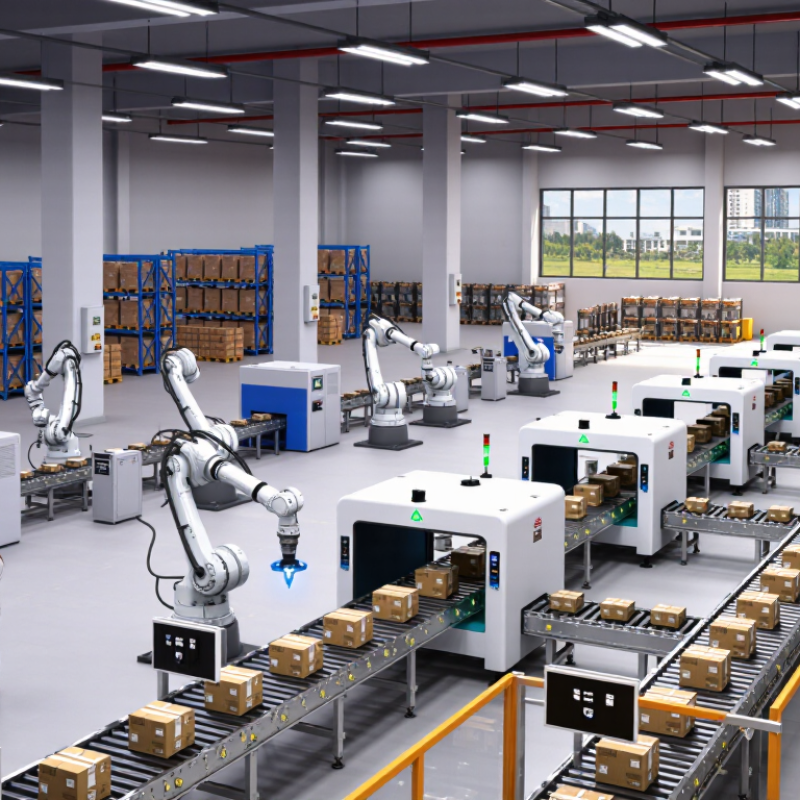
China’s automation market demands more than low equipment prices. The International Federation of Robotics reported 541,302 industrial robot installations worldwide in 2023. China accounted for 276,288 units, or 51% of global installations. This scale raises the standard for local manufacturers. A leading supplier must understand real factory conditions, including dust, vibration, uneven floors, and frequent product changes.
Engineering depth is a stronger measure than a polished demonstration. Reliable manufacturers integrate motion control, machine vision, safety systems, and production software. They should provide traceable component records, documented testing, and clear performance limits. A useful acceptance test measures cycle time, repeatability, energy use, and error recovery. Numbers matter.
After-sales capability also separates experienced manufacturers from ordinary assemblers. Technicians should diagnose faults remotely, replace modules quickly, and train operators on site. The best systems leave usable data, not confusing dashboards. They support preventive maintenance through temperature, vibration, and alarm tracking. Still, no automation project is perfect. Some suppliers underestimate integration time or hide calibration weaknesses. Buyers should question optimistic claims and request factory references, test videos, and measurable results. Reliability is earned after installation.

Chinese automation equipment manufacturers now cover a wide technical range, from factory control units to complete production lines. According to the International Federation of Robotics’ World Robotics 2024 report, China installed 276,288 industrial robots in 2023, representing about 51% of global installations. This scale supports strong production capacity, but equipment quality still varies between suppliers.
Major categories include industrial robots, collaborative robots, CNC systems, PLC-based control cabinets, machine-vision inspection units, and automated assembly stations. Chinese factories also produce conveyor systems, automated storage equipment, packaging machines, and AGVs for internal material movement. In practice, a vision camera may inspect a metal part in milliseconds, while a servo motor positions it within a tightly defined tolerance. These systems often connect through industrial networks and production-management software.
On-site experience shows that integration matters as much as the machine itself. A low-cost robot may appear attractive, yet poor calibration can create repeated defects and hidden downtime. The IFR report also notes that China’s operational industrial robot stock exceeded 1.7 million units in 2023, creating a large demand for maintenance, spare parts, and skilled technicians. Data does not equal fit. Buyers should review cycle-time tests, safety documentation, electrical standards, software access, and after-sales response before selecting a supplier. The difficult part is often not buying equipment, but making different systems communicate reliably.
Chinese manufacturers commonly produce industrial robots, collaborative robots, SCARA robots, delta robots, automated guided vehicles (AGVs), autonomous mobile robots (AMRs), CNC automation systems, machine-vision equipment, and automated assembly and packaging lines.
The chart shows China’s operational stock of industrial robots from 2019 to 2023, measured in thousands of units. The figures include robot installations accumulated across manufacturing sectors and do not represent any specific company or brand.
Source: International Federation of Robotics, World Robotics reports.
China’s automation equipment suppliers serve several high-growth industries. The International Federation of Robotics reported 276,288 industrial robot installations in China during 2023. That represented about 51% of global installations. Automotive factories remain major buyers, using robots for welding, painting, inspection, and battery-pack assembly.
Electronics manufacturers need smaller, faster systems. Suppliers provide precision dispensing, screwdriving, vision inspection, and cleanroom handling. The IEA’s Global EV Outlook 2024 reported that China produced more than 70% of global electric cars in 2023. This growth supports demand for cell formation equipment, robotic testing, and automated material transport. Warehouses also use conveyor systems, autonomous mobile robots, and software-linked sorting stations.
The practical details matter. A supplier must match cycle time, payload, floor space, and maintenance access. A shiny demonstration is not enough. Factory engineers often discover problems during night shifts, when sensors collect dust or grippers lose alignment. Data from the IFR is valuable, but installation figures do not measure uptime or operator training. That is where supplier evaluation becomes less comfortable. A lower purchase price may create higher integration costs later. Food, pharmaceutical, and chemical plants also require traceability, controlled cleaning, and documented safety procedures. Small errors become expensive quickly.
Choosing Chinese automation equipment manufacturers requires more than comparing prices and brochures. Walk through the production area, inspect wiring, guards, sensors, and assembly quality. A clean workshop does not prove reliability, but neglected details often reveal weak process control. Ask for records showing incoming inspection, calibration, software testing, and corrective actions.
Request a sample run using your real materials and operating conditions. Measure cycle time, repeatability, noise, temperature, and product defects. Review the factory acceptance test line by line. Confirm who writes the control logic and how changes are documented. A capable manufacturer should explain tolerances clearly, not hide behind technical language. Evidence matters more than confident promises.
Check component traceability, spare-part availability, maintenance instructions, and operator training. Speak with recent customers when possible, especially those using similar production volumes. Contracts should define acceptance criteria, response times, warranty coverage, and remote support. Certifications can support credibility, but they cannot replace a hands-on audit. No audit is perfect. A rushed visit may miss hidden subcontracting or unstable suppliers. I would leave extra time for repeated testing, because early confidence can be misleading. Reliability is earned through transparent records, realistic trials, and support that continues after installation.
Choosing a Chinese automation equipment manufacturer requires more than comparing quotations. A capable partner should understand your product, production rhythm, and factory constraints. Ask for cycle-time data from a similar project, not only attractive performance claims. During a site visit, inspect cable routing, guarding, spare-part storage, and operator access. Small details often reveal engineering discipline. They matter every shift.
Technical expertise should appear in the proposal. It should explain sensors, controllers, communication protocols, safety circuits, and expected maintenance intervals. Request a factory acceptance test with sample parts and documented results. A short video is useful, but it cannot replace measured trials. Check whether engineers can adjust gripping force, vision settings, or software logic without vague explanations. That conversation is revealing.
Reliability also depends on support after installation. Confirm response times, remote diagnostics, training hours, warranty boundaries, and spare-part availability. Speak with recent customers using similar materials and production volumes. Review change-control procedures before approving custom features. Cheap equipment can become expensive when one unresolved fault stops a line. I have seen this overlooked. A pilot run may expose noise, awkward loading, or cleaning problems that drawings miss. Leave room for revision; the first design is rarely perfect. A dependable partner accepts evidence, documents limitations, and improves the system with you.
| Evaluation Dimension | Suggested Weight | Practical Benchmark or Target | Why It Matters | How to Verify |
|---|---|---|---|---|
| Industry Experience | 10% | Demonstrated experience with the buyer’s product type, production process, and regulatory environment. | Relevant process knowledge reduces design changes, commissioning delays, and operational risk. | Review comparable project records, process descriptions, commissioning reports, and customer references. |
| Customization Capability | 10% | Ability to provide documented layouts, cycle-time calculations, tooling concepts, and process-specific engineering. | Automation equipment often needs to match product geometry, available floor space, materials, and operator workflow. | Request a preliminary concept, equipment layout, risk list, and change-control procedure. |
| Throughput and Cycle Time | 12% | The quoted cycle time should be supported by a clear calculation and validated under defined operating conditions. | Nominal speed alone does not prove that the line can meet actual production demand. | Use sample parts for a factory acceptance test and compare measured output with the agreed specification. |
| Quality and Repeatability | 12% | Defined acceptance limits for positioning accuracy, process capability, defect rate, and inspection performance. | Stable repeatability is essential for consistent product quality and reduced rework. | Review capability studies, inspection records, calibration certificates, and first-article results. |
| System Integration | 10% | Compatibility with existing conveyors, machines, sensors, software, production data systems, and utility infrastructure. | Poor integration can create bottlenecks even when the new equipment performs well in isolation. | Confirm interface lists, communication protocols, data ownership, electrical drawings, and integration responsibilities. |
| Safety Engineering | 10% | Documented risk assessment, guarding, emergency stops, safety controls, lockout procedures, and relevant machinery-safety compliance. | Safety must be designed into the machine rather than added after installation. | Request the risk assessment, safety circuit documentation, validation records, operating instructions, and conformity documentation applicable to the destination market. |
| Reliability and Maintainability | 10% | Accessible service points, preventive-maintenance schedules, spare-parts lists, fault diagnostics, and clearly defined availability targets. | Maintainable equipment reduces unplanned downtime and shortens recovery time. | Review maintenance intervals, critical-component lists, downtime assumptions, diagnostic screens, and mean-time-to-repair targets. |
| Service and Technical Support | 8% | Documented response times, remote-support capability, installation assistance, operator training, and local or regional service coverage. | Fast support is especially important during ramp-up and production interruptions. | Include support response times, escalation contacts, training scope, travel terms, and warranty procedures in the contract. |
| Spare Parts Availability | 6% | Critical spare parts identified in advance, with clear lead times and alternative sourcing options where appropriate. | Long lead times for a low-cost component can cause extended production stoppages. | Request a recommended spare-parts list, stock policy, lifecycle notices, and confirmed delivery times for critical items. |
| Cybersecurity and Data Protection | 5% | Controlled user access, secure remote maintenance, backup procedures, network segmentation, and documented software-update practices. | Connected automation systems can affect production continuity and sensitive manufacturing data. | Review access controls, remote-access agreements, backup and recovery tests, software inventories, and cybersecurity responsibilities. |
| Total Cost of Ownership | 5% | Evaluation of purchase price, installation, training, utilities, consumables, maintenance, spare parts, software, and end-of-life costs. | The lowest initial quotation may not deliver the lowest cost over the equipment’s operating life. | Compare a multi-year cost model using identical assumptions for labor, energy, maintenance, downtime, and consumables. |
| Project Management and Delivery | 7% | Clearly defined milestones for design approval, procurement, build, testing, shipment, installation, training, and acceptance. | Structured project control helps prevent scope gaps and schedule conflicts. | Review the project plan, responsibility matrix, progress-report format, change-order process, and acceptance criteria. |
| Documentation and Training | 5% | Complete electrical and mechanical drawings, software backups, parts manuals, operating procedures, maintenance instructions, and training materials. | Accurate documentation supports safe operation, maintenance, troubleshooting, and future upgrades. | Make document delivery a contractual milestone and check that materials are provided in the required language and format. |