How to Choose the Best Automation Solutions for Your Business?
In today's fast-paced business world, choosing the right automation solutions can be a game changer. Experts in the industry emphasize its importance. Laura Smith, a renowned automation consultant, once said, "The right automation strategy can transform a business's efficiency." This highlights the critical role of automation solutions in enhancing productivity.
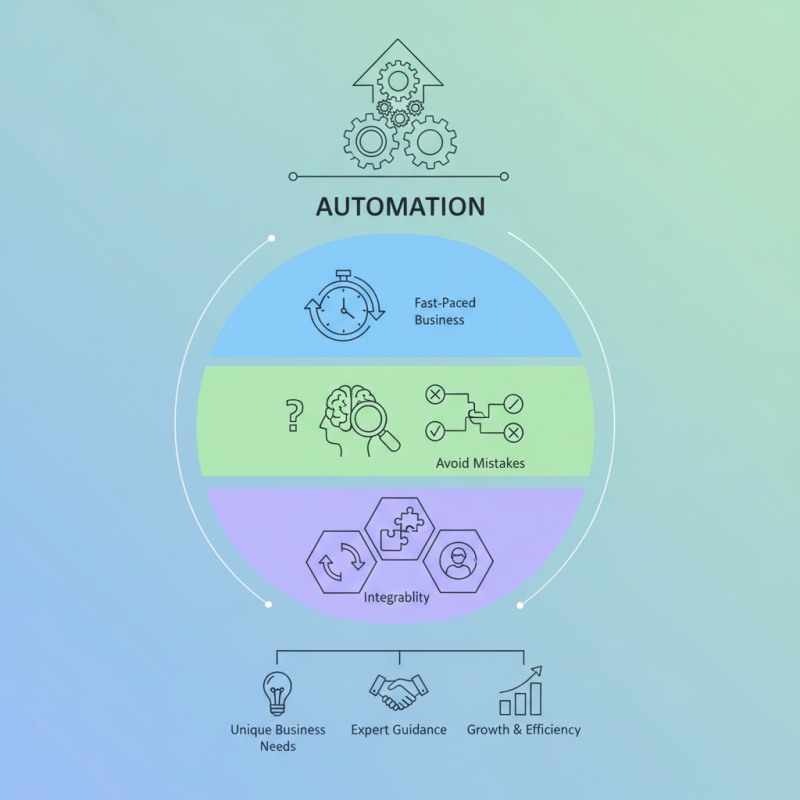
However, the process of selecting these solutions is not straightforward. Many businesses rush into decisions without proper evaluation. This often leads to costly mistakes. Factors like scalability, integration, and user experience must be considered. It is essential to reflect on unique business needs before committing to any automation solution.
Navigating the landscape of automation solutions can be overwhelming. With numerous options available, businesses may find it hard to identify the best fit. It is crucial to seek expert guidance. By taking time to analyze your specific requirements, you can make informed decisions that foster growth and efficiency.
Understanding Your Business Needs for Automation Solutions
Understanding your business needs is crucial when selecting automation solutions. Begin by identifying the tasks that are repetitive and time-consuming. This might include data entry, scheduling, or customer inquiries.
Take a closer look at your team's workflow. Where are the bottlenecks? Are there areas prone to error? These insights can guide your decision-making process.
In addition, consider the scalability of the automation tools. How will they adapt as your business grows? It's essential to select solutions that won’t become obsolete. Conducting a needs assessment can reveal gaps in your current processes. What does your team spend the most time on? Seek feedback from employees. Their firsthand experience can highlight needs that may not be immediately obvious.
Think about potential integration issues as well. Will the new solution harmonize with existing technologies? Sometimes, solutions appear promising but fail to mesh well. This can lead to frustration and inefficiency. A reflective approach to your needs can prevent costly missteps. Each choice should align with your overarching business goals. Remember, automation should simplify your operations, not complicate them further.
Evaluating Different Types of Automation Technologies Available
When evaluating different types of automation technologies, it is essential to assess your business needs. Many automation solutions exist, each with unique features. Some automate repetitive tasks, while others streamline workflows. Identifying which tasks consume the most time is crucial. This reflection can guide you toward the right technology.
RPA (Robotic Process Automation) is popular for automating rule-based tasks. It can handle data entry and transactions efficiently. Yet, it may not work well for complex processes. On the other hand, AI-driven solutions add intelligence. They can learn and adapt over time. However, they require initial setup and training, which can be time-consuming.
Consider cloud-based automation tools, which offer flexibility and scalability. They adapt easily to changing business demands. However, relying on cloud solutions raises concerns about data security. Evaluate these risks against the potential benefits. It’s a balancing act that requires careful deliberation.
Assessing Costs and Return on Investment for Automation Solutions
When considering automation solutions, cost assessment is crucial. You must evaluate both initial expenses and ongoing operational costs. For many businesses, the initial investment can be substantial. However, the long-term benefits often overshadow these costs. Carefully analyze what you can afford. This analysis will guide your decision-making process.
Return on investment (ROI) is another essential factor. You should calculate how much a solution will save over time. More efficient operations often lead to increased productivity. But don’t forget to consider potential hidden costs, like training and maintenance. These can add up and impact your overall ROI.
Sometimes, it’s hard to predict all benefits. Automation can streamline processes, yet some employees may resist change. Balancing technology with human resources is vital. It’s important to consider the cultural fit of any automation solution. Don't overlook how your team will adapt. Their acceptance plays a significant role in achieving success with automation.
Cost Comparison of Automation Solutions
Implementing and Monitoring Automation: Best Practices and Strategies
When implementing automation in your business, a strategic approach is essential. According to a recent industry report, 70% of organizations report increased efficiency after adopting automation tools. However, automation isn't a silver bullet. It must be monitored closely. Regular assessments can help identify bottlenecks or issues that arise unexpectedly.
Effective monitoring strategies include setting clear KPIs. For instance, tracking time savings and error reduction can provide valuable insights. In a survey, 56% of businesses found that automation reduced operational costs significantly. Yet, an alarming 45% admitted that they failed to continuously analyze their automation processes. This neglect can lead to diminished returns.
Training employees is also crucial. A report indicates that 80% of workers feel unprepared for using new technologies. Well-designed training programs can bridge this gap, ensuring staff are confident. Without proper training, automation may create frustration rather than value. Balancing technology with human input is vital for success.
How to Choose the Best Automation Solutions for Your Business?
| Automation Type |
Implementation Cost ($) |
Expected ROI (%) |
Time to Implement (months) |
Maintenance Frequency (per year) |
| Robotic Process Automation (RPA) |
15,000 |
250 |
3 |
2 |
| Customer Relationship Management (CRM) |
20,000 |
150 |
4 |
1 |
| Email Marketing Automation |
5,000 |
200 |
2 |
1 |
| Inventory Management Systems |
10,000 |
180 |
5 |
3 |
| Human Resource Management Solutions |
25,000 |
220 |
6 |
2 |