How to Choose the Right Mining Automation System?
Choosing the right mining automation system begins with a clear view of the work it must do. Mining automation can support haulage, drilling, fleet coordination, equipment monitoring, or several connected tasks. The best fit depends on site conditions, not a feature list alone. A remote open-pit operation has different needs from an underground mine with narrow headings and limited connectivity.
Look closely at how equipment, software, and people will work together. Can the system connect with your existing fleet-management tools? How does it respond when a wireless signal drops near a pit wall or tunnel bend? Ask vendors to demonstrate real operating scenarios, including routine maintenance and recovery from a fault. Small details matter. A dashboard that shows machine status is useful, but operators also need timely, understandable alerts. Safety procedures, training, cybersecurity, and access to technical support should be part of the evaluation, not later additions.
Costs deserve the same scrutiny as capabilities. Compare installation, training, maintenance, software updates, and expected productivity gains over the system’s working life. Where possible, use a site trial and define measurable targets before deployment. No system is flawless. A pilot may reveal awkward workflows or data gaps that were easy to miss in a sales presentation. That is useful evidence, even when it complicates the decision. A careful choice balances reliability, integration, workforce readiness, and long-term value—and leaves room to reassess as the mine changes.
Define the Automation Scope Using ISO 17757:2019 for Mining Machinery
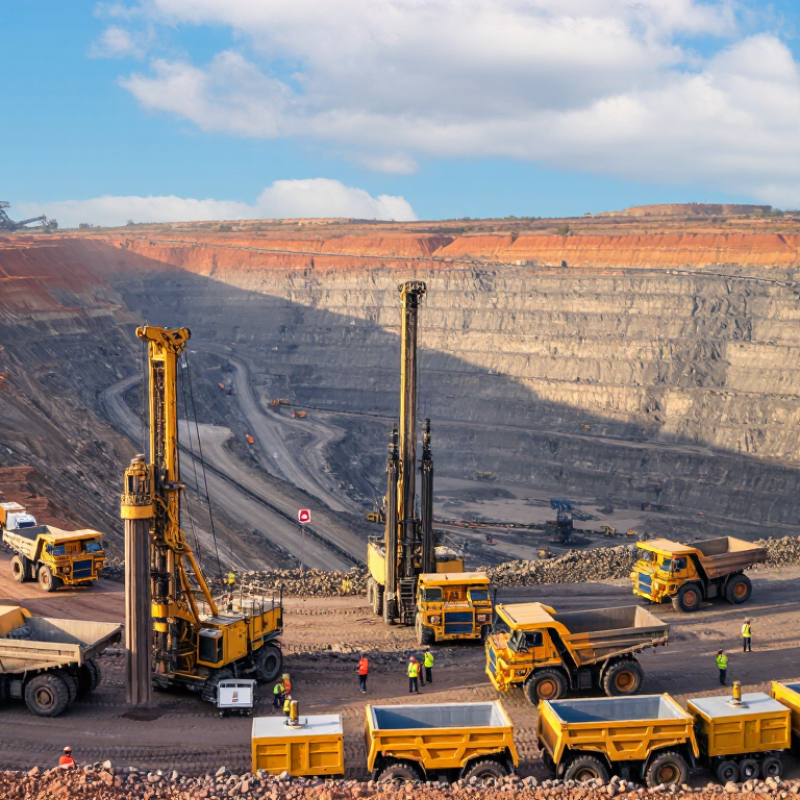
Choose an automation system by defining the work it may perform, the area it may enter, and the people or machines it must avoid. ISO 17757:2019 addresses safety for autonomous and semi-autonomous earth-moving and mining machine systems. Use it to set boundaries before comparing equipment. That matters.
For a haul truck, define whether automation covers travel on a closed haul road, loading beside a shovel, or reversing near service vehicles. Record operating modes, handover points, restricted zones, and what happens after a communication failure. Apply the same questions to drilling and dozing. ISO 17757 offers a safety framework, not a site-specific risk assessment or a ready-made procurement checklist. Terrain and traffic patterns still need careful review.
The human consequences are real. ICMM’s 2023 safety-performance report recorded 42 fatalities among member companies. That figure cannot prove automation alone prevents incidents, but it reinforces the need to assess exposure, emergency stops, and recovery procedures. Test scenarios with operators and maintenance crews, including a parked machine blocking a narrow road. The awkward detail is often the useful one. Document assumptions, then revisit them after field trials; a scope that looks tidy in a control room may fail in dust, poor visibility, or an unexpected vehicle encounter.
Prioritize Safety: ILO Estimates Mining Has 1% of Workers, 8% of Fatal Accidents
Mining employs about 1% of the global workforce, yet accounts for an estimated 8% of fatal work accidents, according to the International Labour Organization (ILO). This stark imbalance makes safety a core test when choosing a mining automation system. Assess how it handles vehicle interactions, equipment faults, and communications blackouts—not just how quickly it moves ore. NIOSH guidance on mine safety also emphasizes identifying hazards and evaluating controls. Automation can reduce exposure to dangerous tasks, but it cannot remove every risk. A sensor can be clean in a demonstration and still struggle with dust, glare, or vibration underground.
Tips: Test the system in the actual work area. Check its safe-stop behavior, alert visibility, and manual override. Ask operators to review the workflow before deployment.
Request incident and near-miss records from comparable sites, and ask how performance is monitored after installation. Confirm that maintenance teams can inspect components and restore safe operation without relying on a single specialist. Train workers for both routine operation and failure scenarios. A control room may look calm; the haul road beyond it may not. ILO’s estimate is a broad industry warning, not a prediction for any one site. Still, it deserves more weight than a polished demo.
Assess Fleet, Site Conditions, Network Coverage and Control Requirements
Match the system to the fleet you actually operate, not the fleet on a procurement slide.
Record vehicle age, payload, duty cycle, braking performance, and the share of mixed traffic. McKinsey’s 2015 mining productivity analysis estimated that labor productivity in mining fell about 3.5% annually between 2004 and 2014. That figure is historical, not a forecast, but it underlines why automation should target a measured bottleneck. A truck queue at a shovel may need different controls from a loader working in a narrow underground drift.
Site conditions change the answer.
Map gradients, dust, vibration, water ingress, changing light, and blind corners across real shifts. Then test sensors and safe-stop behavior in those locations. The World Economic Forum’s 2017 Digital Transformation Initiative projected up to US$320 billion in value from digital transformation in mining and metals over 2016–2025. This was a sector-wide estimate, not a guaranteed return for any mine. Small details matter.
Check network coverage underground and across pit edges, not just at the control room.
Log dead zones, latency, and handover failures during operating hours; a coverage map alone can look reassuring. Define what happens when the connection drops: does the vehicle stop, continue at reduced speed, or require remote intervention? Specify who may pause or resume operations, and how alarms reach operators. A practical trial should include shift crews and maintenance staff. Their feedback may expose awkward controls or unrealistic assumptions. It is easy to overestimate how quickly people will trust a new system.
Compare Key KPIs: Availability, Cycle Time, Payload and Intervention Rate
How to Choose the Right Mining Automation System?
Compare Key KPIs: Availability, Cycle Time, Payload and Intervention Rate
Availability shows how much scheduled time equipment can operate, but teams must use the same definition when comparing systems. Decide whether planned maintenance counts as downtime. Definitions matter. Cycle time should cover consistent steps, such as loading, hauling, dumping, and returning. Record route length, road conditions, and congestion too; otherwise, a faster result may reflect an easier shift, not better automation.
Payload affects productivity and equipment wear. Compare average loads and load variation, not just the rated maximum. Frequent underloads can add trips, while excessive loads may strain trucks and roads. Track intervention rate as human assists per operating hour or completed mission. Separate routine remote support from fault recovery. A low rate sounds reassuring, but it can hide long, disruptive interventions. No single KPI tells the whole story.
Tips: Compare results across several shifts, routes, and weather conditions. Check the raw logs, not only summary dashboards. Note every metric’s boundaries and exclusions. A neat spreadsheet can still mislead, especially when operating conditions differ. That detail is easy to overlook.
How to Choose the Right Mining Automation System?
Compare availability, cycle time, average payload and intervention rate across operating approaches.
Availability (%)
Higher is better
Cycle Time (min)
Lower is better
Average Payload (t)
Higher, within rated capacity
Interventions
Events per 100 operating hours; lower is better
Illustrative planning scenario, not a measured industry benchmark. Values assume comparable haul routes, truck class and operating conditions; actual results vary by site. Assess all four KPIs together, and confirm payload remains within vehicle limits.
Verify Interoperability, Cybersecurity and Lifecycle Costs Before Piloting
A mining automation system must communicate with equipment already working across the site. Check whether it can exchange useful data with fleet management, maintenance, and control-room systems—not just whether it supports a listed protocol. During a pilot, follow one task from machine sensor to operator screen. Note delays, missing fields, and manual re-entry. Small details matter. A clean demonstration may not reveal how older equipment behaves during a busy shift.
Cybersecurity needs the same practical scrutiny. Map who can access each system, where data travels, and who applies security updates. Test account controls, event logging, backup restoration, and recovery from a lost connection. Do not assume a mine network is safe simply because it is separate from the public internet. Keep tests controlled and coordinated with site operations. One awkward question is worth asking: who owns the response when a supplier’s remote access is involved?
Lifecycle cost estimates should include integration, training, network upgrades, spare parts, software support, and downtime—not just purchase price. Compare these costs across the expected service life, using conservative productivity assumptions. Include staff time; it is easy to overlook. A pilot can clarify some uncertainties, but it cannot reproduce every season, shift pattern, or maintenance issue. Record what remains untested, and make that uncertainty part of the investment decision.