How to Choose the Right Pcb Board for Your Project?
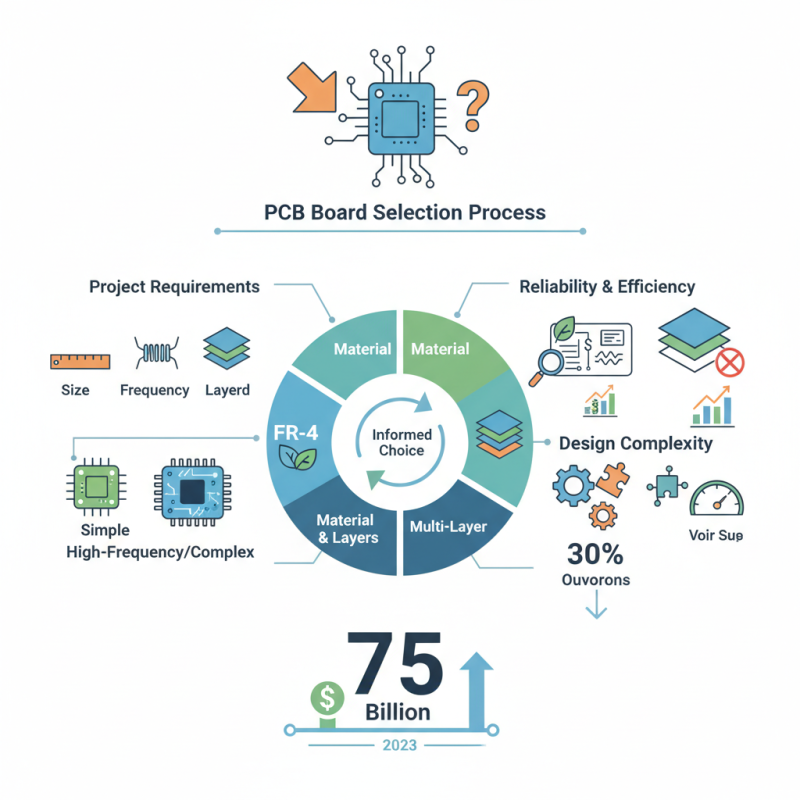
Choosing the right Pcb Board for a project is crucial for success. In 2023, the global PCB market is expected to reach $75 billion, reflecting the growing reliance on electronic devices. Selecting the wrong board can lead to costly failures and delays.
Factors such as board size, material, and layer count significantly impact performance. High-frequency applications require specialized materials, while simple projects might work fine with standard FR-4 boards. The complexity of your design determines the type of PCB board to use.
Moreover, recent studies indicate that nearly 30% of PCB development projects exceed budget due to design flaws. This emphasizes the need for careful consideration. Understanding the specific requirements of your project is essential for avoiding common pitfalls. An informed choice can enhance reliability and efficiency, making the right PCB board a fundamental aspect of any successful electronic project.
Understanding the Basics of PCB Boards and Their Types
When selecting a PCB board, understanding the basic types is essential for your project. There are several categories, including single-sided, double-sided, and multi-layer boards. Each type serves different purposes and can affect your design's functionality. For instance, single-sided boards are simpler and cost-effective, making them a common choice for basic applications. In contrast, multi-layer boards offer increased complexity and density, suitable for advanced technologies.
Industry data indicates that the global PCB market is expected to reach $78 billion by 2026, according to a report by Research and Markets. This growth is driven by the rising demand for electronic devices. As technology advances, manufacturers are increasingly leaning towards flexible PCBs, which can accommodate smaller and more intricate designs. The choice of material also influences performance. Common options include FR-4 and polyimide, each with distinct thermal and electrical properties.
However, some challenges persist in the PCB selection process. Designers often grapple with balancing cost and quality, especially in low-budget projects. Selecting the wrong type can lead to design flaws or reduced performance. It is crucial to assess the specific needs of your project, including design complexity and environmental factors. Evaluating these aspects thoughtfully can lead to more reliable outcomes in PCB development.
Identifying Your Project Requirements and Specifications
Choosing the right PCB board for your project starts with understanding your requirements. Identify the function your PCB will serve. Will it support high-frequency signals or simple power distribution? Reports indicate that around 30% of design failures come from inadequate specifications. Clear specifications help avoid costly redesigns.
Consider the size and shape of your PCB. Will it fit your device? Manufacturing errors often stem from overlooked dimensions. For compact designs, a multi-layer PCB may be necessary. Data from industry surveys shows that up to 40% of projects encounter issues with board size miscalculations.
Tips: Use 3D modeling tools to visualize space. Collaborate with experienced engineers for insights.
Evaluate components and their power ratings. If your project involves high power loads, ensure the PCB can handle the heat. Research shows that thermal management is crucial for longevity. Remember to account for the average operating environment, as fluctuation in conditions can impact performance.
Tips: Always leave room for thermal expansion and consider using thermal vias. It’s okay to iterate on your design, as it often leads to better results.
Evaluating Material Options for PCB Production
Choosing the right materials for PCB production is crucial. Different materials affect the board’s performance, durability, and cost. Common materials include FR-4, polyimide, and metal core. Each option caters to specific needs. Understanding their properties can guide your decision.
FR-4 is popular for general applications. It balances cost and performance well. However, it may not suit high-frequency tasks. Polyimide boards are flexible and can endure extreme temperatures. They’re ideal for aerospace or automotive applications. Metal core PCBs provide better heat dissipation, optimal for LED circuits. Each material brings advantages and drawbacks.
Tips: Always consider your project's requirements. Evaluate thermal management needs carefully. Don't overlook the cost implications of advanced materials. Change your mind if initial choices don’t meet performance standards. Stay adaptable; the right material could transform your project's success.
Material Options for PCB Production
Analyzing Design Considerations for PCB Layout
When designing a PCB layout, several design considerations come into play. Understanding the arrangement of components is crucial. Keeping related components close together minimizes trace length. This can reduce electromagnetic interference and enhance signal integrity. But it’s challenging to strike a balance between compactness and accessibility. Too tight an arrangement can make repairs difficult later.
Another important aspect is the choice of trace width. Wider traces can handle higher currents but require more space. Is the layout optimized for heat dissipation? Using thermal vias and heat sinks helps manage temperatures effectively. Ensuring proper grounding is also essential. A solid ground plane can prevent issues with noise and crosstalk.
Ultimately, each design choice affects the others. A PCB may look perfect on paper but face issues during assembly or testing. It’s vital to iterate on the design and conduct thorough testing. Reflections on past mistakes will lead to better decision-making in future projects. Each layout teaches something new, and experience builds expertise.
How to Choose the Right PCB Board for Your Project? - Analyzing Design Considerations for PCB Layout
| PCB Type | Layer Count | Material | Thickness (mm) | Surface Finish | Cost ($) |
| Standard FR-4 | 1-2 | FR-4 | 1.6 | HASL | 15 |
| High-Frequency | 4 | PTFE | 1.5 | Gold Plated | 80 |
| Flexible PCB | 1-2 | Polyimide | 0.2 | ENIG | 50 |
| Multilayer PCB | 6+ | FR-4 | 1.6 | OSP | 120 |
Comparing Cost Factors and Supplier Options for PCBs
When selecting a PCB board for your project, cost factors and supplier options are crucial. According to a report by IPC, the average price of PCBs has increased by 5% annually in recent years. Understanding this cost trend is essential for budgeting your project. Factors like material type, complexity of design, and volume affect costs significantly.
The choice of a PCB supplier can impact both cost and quality. A survey by PCB West indicated that 70% of engineers prioritize reliability over cost. While low-cost suppliers may seem appealing, they can lead to long-term issues, such as delays in production or poor performance. Balancing cost with quality is vital.
Tip: Always request samples before committing to a large order. This can help evaluate the supplier's quality. Investing time upfront can save costs later. Consider using online PCB calculators to estimate pricing based on your design specifications. As you explore options, remember that the cheapest choice may not always be the best for your project's success.