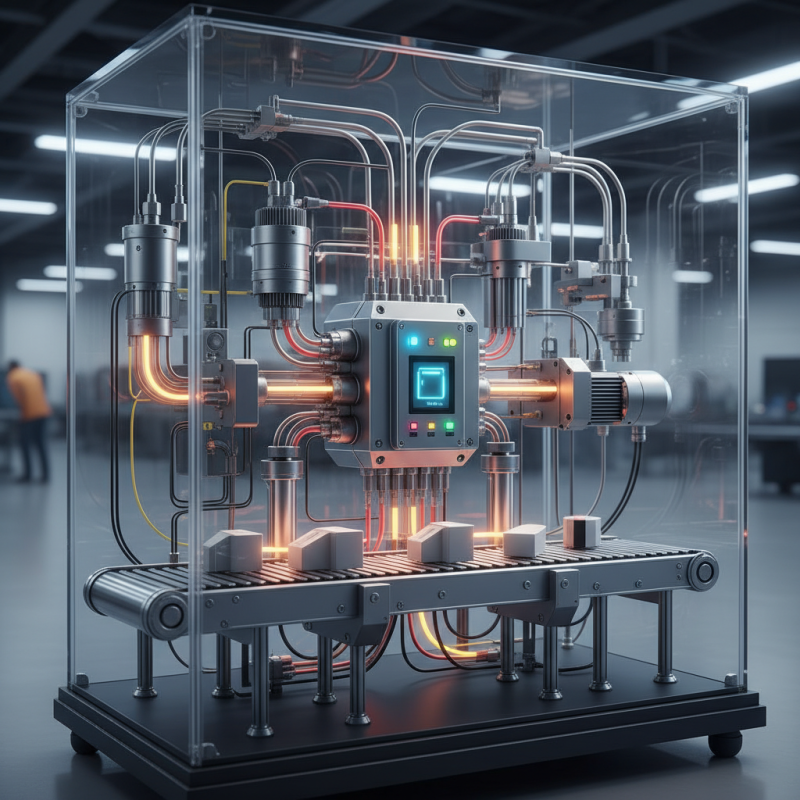
What is Control Components and How Do They Work?
Control Components play a crucial role in various systems. They ensure processes run smoothly and accurately. By regulating the flow of energy, materials, and information, these components enhance efficiency and functionality.
These components can be found in different applications, from industrial machinery to simple home appliances. Their operation relies on sensors, actuators, and controllers. Together, they create a feedback loop that adjusts the system based on real-time data. This interaction is key to maintaining performance levels.
However, not all Control Components are perfect. Some may face design flaws or compatibility issues. As technology evolves, staying updated on advancements in control components becomes essential. This proactive approach helps prevent potential failures and optimizes overall system effectiveness.
What Are Control Components in Industrial Automation?
Control components play a crucial role in industrial automation. These components manage and regulate various processes in manufacturing. They ensure that machinery operates smoothly and efficiently, leading to increased productivity.
Examples of control components include sensors, actuators, and controllers. Sensors detect changes in the environment, such as temperature or pressure. Actuators convert signals into physical action. Controllers analyze data and decide how a system should respond. Together, they create a feedback loop that maintains optimal conditions.
Yet, the integration of these components can be challenging. Misalignment between parts can lead to inefficiencies. Sometimes, sensors fail to provide accurate readings. This can result in unexpected downtime. Operators must constantly monitor and maintain these systems to prevent issues. Continuous improvement in understanding these components can lead to better automation systems.
The Role of Sensors and Actuators in Control Systems
Control systems rely heavily on sensors and actuators. Sensors gather data from the environment. They transform physical phenomena into electrical signals. Actuators convert these signals into physical actions. This interplay creates effective control at various levels.
Consider temperature control in a room. A sensor detects the current temperature. It sends this data to a controller. The controller then signals an actuator to adjust the heating or cooling system. Sometimes, errors occur. Sensors might misread temperatures due to placement issues. Actuators may fail to respond quickly. These flaws can lead to poor system performance.
Tips: When setting up sensors, place them where they can accurately measure conditions. Regular maintenance on actuators can prevent breakdowns. Don’t hesitate to review sensor data regularly. Small adjustments can make a big difference in efficiency. Keep your system responsive by ensuring all components work in harmony.
Sensor and Actuator Performance in Control Systems
This chart illustrates the performance of various sensors and actuators in control systems based on their response time in milliseconds. Lower response times indicate better performance, which is crucial for effective control in automation applications.
Types of Control Components and Their Applications in Industry
Control components play a crucial role in various industries. They help regulate processes, ensuring efficiency and safety. These components include sensors, actuators, and controllers. Each type serves a specific purpose. For instance, sensors detect changes in the environment. They gather data, sending it to controllers for processing.
Actuators, on the other hand, respond to signals from controllers. They physically alter processes in machinery. This might involve moving a valve or adjusting a motor's speed. Controllers process information from sensors and send commands to actuators. Their effectiveness hinges on accurate data. Poor sensor performance can lead to errors in actuation.
Industries use these components for different applications. Manufacturing lines rely on them for automation. HVAC systems use control components to maintain temperature. Yet, challenges exist. Sometimes components fail or lag, causing inefficiencies. Regular maintenance is vital. Reflection on control systems can improve operations significantly. The balance between technology and human oversight remains essential.
How Feedback Loops Enhance Control Component Efficiency
Feedback loops play a crucial role in enhancing the efficiency of control components. These loops help system operators refine processes continuously. As a result, adjustments can be made based on real-time data. For instance, in a climate control system, temperature sensors provide essential information. When the actual temperature deviates from the desired level, adjustments are triggered. This ensures a comfortable environment with minimal energy waste.
Control components rely on feedback to improve performance. They receive input and adjust actions accordingly. However, not all feedback loops function perfectly. Sometimes, delays in data transmission can hinder response times. This can lead to overheating or overcooling in HVAC systems. Such inefficiencies highlight the need for constant monitoring and updates. Operators should frequently review the system's performance. This reflection can lead to new improvements.
Creating effective feedback loops requires careful consideration. Implementing a robust feedback mechanism can be challenging. The balance between responsiveness and stability is delicate. Sometimes, a reactive approach can cause oscillations or instability. Striking a balance may require trial and error. Continuous improvement is key for optimizing control component efficiency. Being aware of these challenges helps enhance system performance.
Industry Trends: Advancements in Control Component Technologies
The landscape of control component technology is evolving rapidly. Recent reports indicate that the global control components market is expected to grow at a CAGR of 7.5%, reaching approximately $10 billion by 2025. This growth is driven by increased automation and smart technologies in various industries. In sectors like manufacturing and energy, advanced control components can improve efficiency and reduce costs.
Trends show a significant shift toward digitalization. Industrial Internet of Things (IIoT) integration enhances real-time data collection. This enables better monitoring and control over processes. While the adoption of AI and machine learning is improving predictive maintenance, challenges remain. The high initial investment can deter smaller companies. More research into cost-effective solutions is vital.
**Tip:** Always evaluate your current control system's efficiency. Are there areas for improvement? Small adjustments can yield big results.
Another notable trend is modular design in control components. Companies increasingly demand flexibility. Modular systems allow for easy upgrades without complete overhauls. However, interoperability issues can arise as systems vary by vendor. Companies should consider compatibility during selection.
**Tip:** When upgrading, prioritize compatibility. A lack of standardization can lead to future headaches.
As technology advances, staying informed on these trends is crucial for effective decision-making in control components.