How to Implement Mining Automation for Increased Efficiency and Safety?
Mining automation is transforming the industry. A recent report by McKinsey highlights that automation can improve productivity by up to 30%. This innovation reduces costs and minimizes human error. Companies are adopting various technologies, such as autonomous trucks and remote-controlled machinery. These tools enhance safety and efficiency in hazardous environments.
However, challenges exist. The initial investment for automation is significant. Training and skills development are critical for workers. There is apprehension about job displacement among employees. Balancing technological advancement with workforce stability requires careful planning.
Despite the concerns, the benefits are substantial. Increased efficiency leads to higher output levels. Safety records improve as machines take on dangerous tasks. Embracing mining automation is essential for future success, but it must be implemented thoughtfully.
Overview of Mining Automation Technology and Its Current Trends
Mining automation technology has seen significant advancements in recent years. Companies are adopting automated solutions to enhance safety and efficiency. These technologies include
drones,
autonomous vehicles, and
real-time monitoring systems.
They help reduce human error, streamline operations, and improve productivity.
Tip: Invest in training for your staff on automation tools.
Understanding the technology is crucial for a smooth transition.
Current trends in automation highlight the importance of data analysis.
By leveraging big data, mining operations can make informed decisions. However, there are challenges.
Transitioning to fully automated systems can lead to unexpected issues. Workers may feel insecure about job displacement.
Addressing these concerns is vital for successful integration.
Tip: Engage with employees during the automation process.
Their feedback can provide practical insights that improve implementation.
As automation evolves, the need for a robust cybersecurity strategy increases.
Protecting sensitive operational data is essential. Companies must stay ahead of potential cyber threats while embracing new technologies.
Balancing innovation with security is a challenging task that requires ongoing attention.
Key Benefits of Automation in Mining: Efficiency and Safety Enhancements
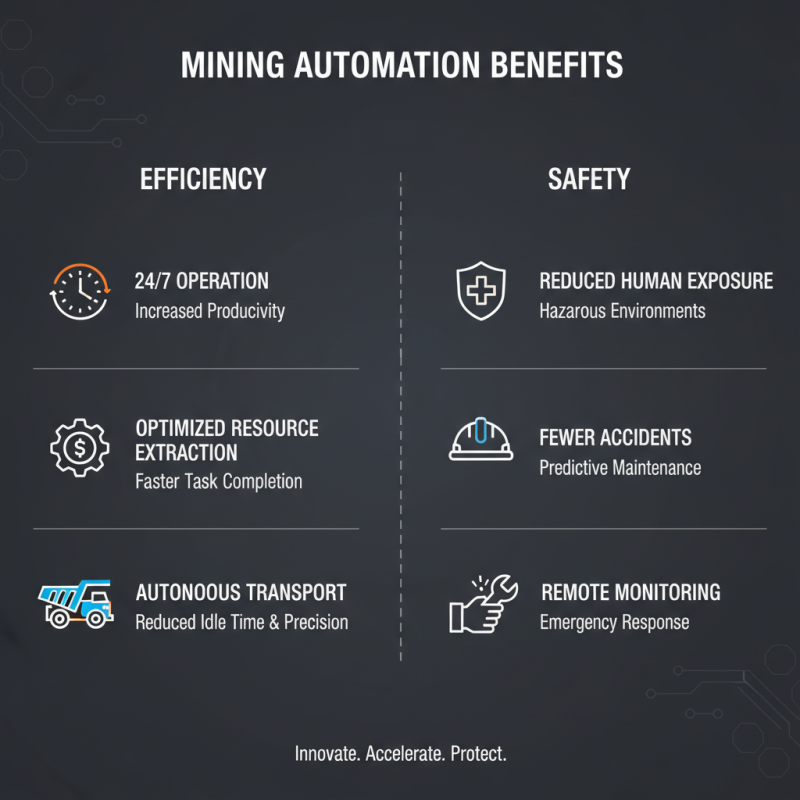
Mining automation offers significant benefits, particularly in efficiency and safety. Automated systems can operate 24/7, leading to increased productivity. They help optimize resource extraction, as machines can perform tasks faster than human workers. For instance, autonomous trucks transport materials with precision and speed, reducing idle time.
Safety is a critical area where automation shines. Automated equipment can take over dangerous tasks, minimizing human exposure to hazardous environments. For example, remote-operated drills can navigate complex underground tunnels without putting workers at risk. However, implementing these systems requires careful planning and training. Workers need to adapt to new technologies, which can be a challenge.
Obstacles remain in achieving full automation. Technical glitches can lead to delays and safety concerns. There is a learning curve for operators who must understand new systems. Regular maintenance of equipment is crucial to ensure safety standards are met. Addressing these issues is key to maximizing automation’s potential in mining.
Essential Automation Technologies in Mining: AI, IoT, and Robotics
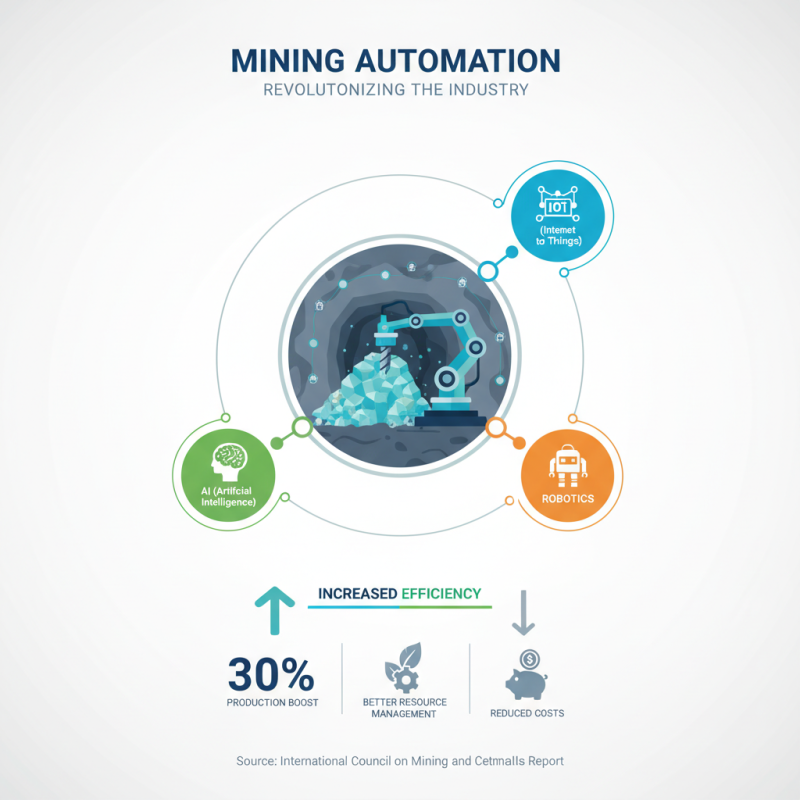
Mining automation is revolutionizing the industry. Technologies like AI, IoT, and robotics play crucial roles. According to a report by the International Council on Mining and Metals, automation can increase production efficiency by up to 30%. This efficiency translates to better resource management and reduced costs.
AI enables predictive maintenance. Sensors predict equipment failure before it occurs. IoT enhances connectivity, allowing real-time data sharing. It helps in monitoring conditions and optimizing operations. In a study by McKinsey, mines that adopted IoT saw a 20% improvement in operational efficiency. Yet, integration poses challenges. Many companies struggle with existing systems. Cybersecurity risks also increase with more connectivity.
Robotics enhances safety in hazardous environments. Automated vehicles can operate in unsafe areas. A report from PwC indicated that autonomous vehicles could reduce workplace injuries by 40%. However, reliance on automation raises questions. Skills gaps may emerge as human roles diminish. Additionally, decision-making needs careful oversight. It’s essential to balance technology and human expertise.
Implementing Automation: Step-by-Step Guide for Mining Operations
Implementing automation in mining operations requires careful planning. Start by assessing current processes and identifying bottlenecks. Gather data on production rates and safety incidents. This step is crucial. Automation aims to enhance efficiency and reduce risks.
Once the assessment is complete, develop a clear strategy. Choose technologies that fit your needs. This might include automated vehicles, drones, or sensors for data collection. Remember, integration can be challenging. Not all teams are ready for a tech overhaul. Training is essential. Workers may resist change. They need reassurance about job security and safety.
Begin with pilot programs. Implement new technologies on a small scale first. Identify shortcomings and gather feedback. Adjust the approach based on results. Continuous evaluation is key. Automation isn’t a one-time fix. It requires ongoing assessment and refinement. Conclusively, while automation holds promise, it’s not without its challenges.
Case Studies: Successful Mining Automation Implementations and Their Outcomes
Mining automation has reshaped operations in various sectors. One notable case involved a mid-sized mining company that integrated autonomous haul trucks. Initially, they faced issues with equipment calibration. However, after refining their approach, productivity increased significantly. Automating haulage reduced operational costs by over 20%. Additionally, fewer human operators in hazardous zones improved worker safety.
Another successful implementation came from a company that utilized drones for surveying. They faced challenges in data accuracy initially. By enhancing their data processing methods, they achieved remarkable improvements. Drones enabled faster site assessments, cutting survey time by half. These changes not only boosted efficiency but also allowed teams to address potential safety hazards more proactively.
Despite clear benefits, some have struggled with the transition. Training staff for new technologies often takes longer than anticipated. Resistance to change from existing workers can slow down progress. Companies must continually assess their strategies and outcomes to ensure long-term success in mining automation.
Mining Automation Impact on Efficiency and Safety