How to Implement Process Automation for Your Business Success?
In today's fast-paced business world, process automation is increasingly vital for success. Companies that embrace automation can streamline operations and boost efficiency. Imagine reducing manual tasks and freeing up valuable employee time. With process automation, you can focus on innovation and customer service.
However, implementing process automation isn't without its challenges. Many organizations struggle to identify which processes to automate. Choosing the right tools can also feel overwhelming. It's crucial to assess your current workflows carefully. This reflection can help pinpoint areas ripe for improvement.
Ultimately, process automation should enhance your business. It requires thoughtful planning and continuous evaluation. Don't rush the process. Take the time to learn from early attempts. With patience and strategy, you can leverage automation to drive long-term success.
Identify Key Processes for Automation in Your Business
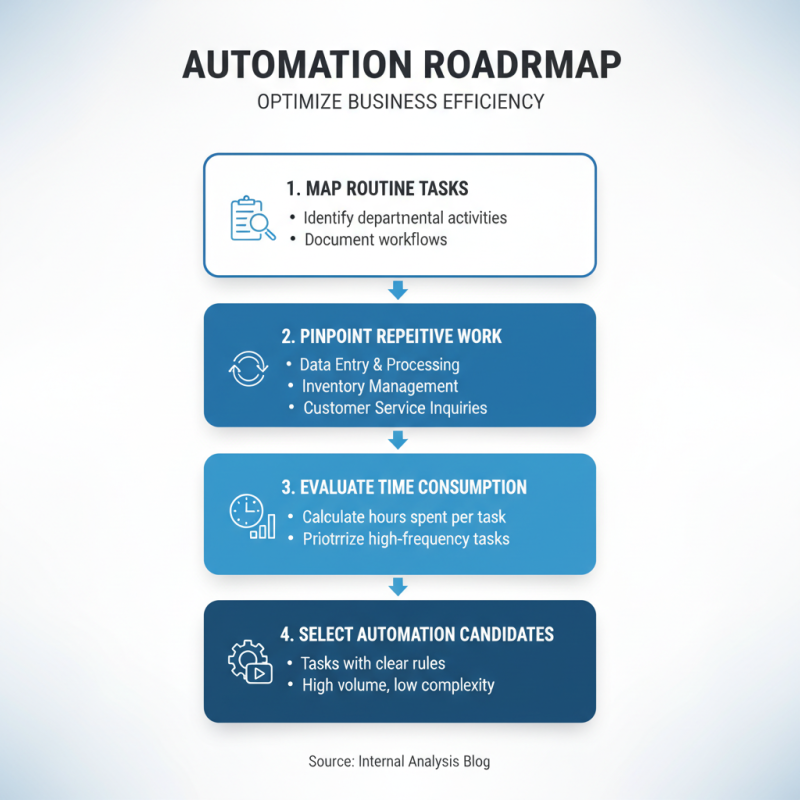
Identifying key processes for automation is a crucial step in optimizing business efficiency. Start by mapping out routine tasks across different departments. This includes everything from data entry to inventory management. Look for repetitive tasks that consume valuable time. These are the prime candidates for automation.
Consider the communication process within your team. Automating notifications, reminders, and updates can significantly reduce manual follow-ups. Don't overlook customer service. Implementing chatbots can streamline responses to common queries. Analyze your existing processes with scrutiny. Some tasks may seem essential but could actually drain resources.
Reflection is important. Evaluate how every automated process impacts your workflow. Not all automation will yield immediate benefits. Some solutions may require fine-tuning before they fit seamlessly into your operations. It’s essential to remain flexible and open to adjustments. This attitude can lead to long-term success.
Assess Automation Tools and Technologies for Effectiveness
Evaluating automation tools and technologies is crucial for enhancing business operations. A report from McKinsey found that 70% of organizations could automate at least one business process. This statistic highlights a significant opportunity for efficiency. However, not all tools yield the same effectiveness. Comprehensive assessments often reveal that some tools lack compatibility with existing systems or are overly complex for users.
Understanding the specific needs of your business is vital. Recent studies indicate that companies prioritizing user-friendly interfaces report a 30% higher adoption rate. Additionally, aligning tool capabilities with business goals is essential. A survey by Forrester Research showed a 50% increase in productivity when automation tools met targeted outcomes. Many businesses make the mistake of overestimating the power of automation. Before full implementation, pilot testing can identify potential downtimes and inefficiencies.
Budget constraints can also impact the selection of tools. A Gartner report suggests that 45% of businesses face obstacles due to high costs of automation technologies. Balancing cost with functionality requires careful analysis. Fostering a culture of adaptability may help overcome initial resistance and transition challenges. This approach ensures a smoother integration of automation tools while reflecting on the process's limitations and areas for improvement.
Develop a Strategic Implementation Plan for Automation
Developing a strategic implementation plan for automation requires careful consideration. According to a recent report by McKinsey, nearly 45% of jobs could be automated with current technology. This shows the potential for process automation to increase efficiency. However, many businesses struggle to identify the right areas for automation.
Start by assessing repetitive tasks that frequently consume time. For instance, data entry and invoice processing are common pain points. These tasks often lead to employee burnout. A study by Deloitte finds that organizations implementing automation can expect a 25% reduction in operational costs. Yet, over-reliance on automation can lead to job displacement, which must be taken into account.
Focus on training and development alongside automation. Employees should understand how to interact with new systems. Engaging staff in this transition is crucial. A Gallup survey revealed that only 29% of employees feel equipped to adapt to technological changes. Investing in their skills can make a significant difference. While automation offers remarkable benefits, a balanced approach is essential for sustainable success.
Train Employees to Adapt to Automated Processes
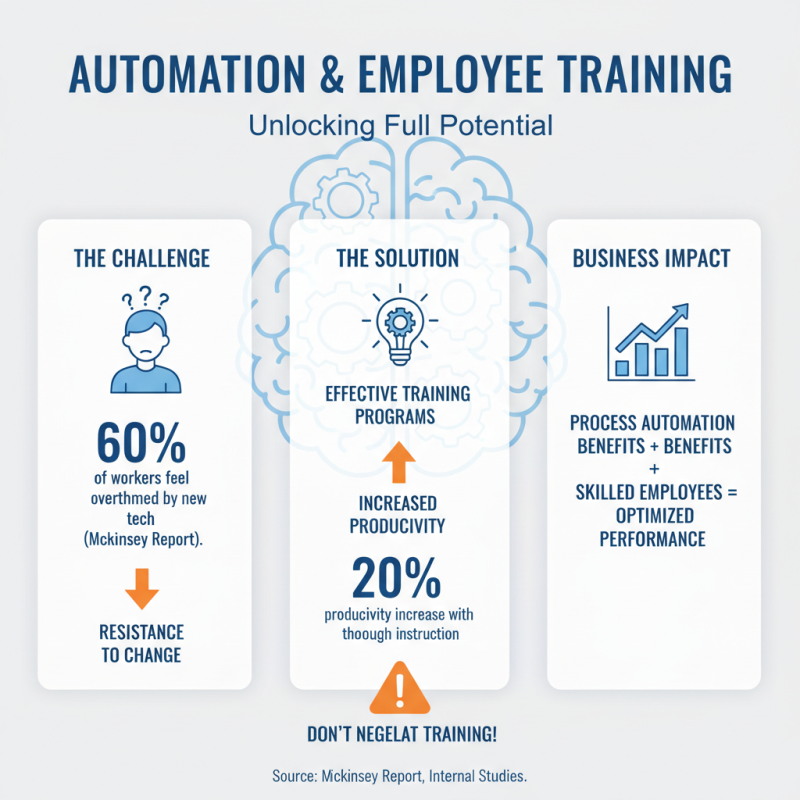
Adopting process automation can significantly benefit businesses, but employee training is crucial. According to a McKinsey report, 60% of workers feel overwhelmed by new technologies. This statistic highlights the importance of effective training programs. Employees who receive thorough instruction on automated processes report a 20% increase in productivity. However, many companies neglect this aspect and underestimate employees' resistance to change.
Training should focus on practical applications. Simulations and hands-on experience can deepen understanding. Yet, one in five employees may still struggle after initial training. Continuous learning opportunities and refresher courses can help. Businesses often overlook this need for ongoing support, leading to frustration and decreased morale. A Deloitte survey found that 54% of employees desired more learning opportunities related to automation.
Engaging employees in the transition is vital. Open communication channels can address concerns and gather feedback. Not all team members will adapt at the same pace. Recognizing individual differences is essential for a smooth implementation. Companies must create an environment where employees feel valued and heard during this technological evolution.
Monitor and Optimize Automated Processes for Continuous Improvement
Monitoring and optimizing automated processes is vital for business success. Regular assessment helps identify weaknesses and areas for improvement. For instance, tracking the time taken for a task can reveal inefficiencies. If an automated response system is slower than expected, it might frustrate customers. Identifying such issues early allows for adjustments that enhance performance.
Continuous improvement involves a feedback loop. Gathering data from automated processes is crucial. Analyze performance metrics regularly. Look for trends over time. Sometimes, automation might not work as intended. A process designed to save time may actually create bottlenecks. Regular reviews and adjustments are necessary to ensure optimal functioning.
Engaging team members in the optimization process adds value. They often have insights into the automation challenges faced daily. Their input can lead to practical solutions that algorithms may overlook. Creating a culture of continuous feedback fosters ongoing enhancements. Embrace imperfection; it drives innovation and growth.