What Is a Miniature Circuit Breaker and How Does It Work?
A Miniature Circuit Breaker (MCB) is a crucial component in electrical systems. It protects circuits from overload and short-circuit conditions. Unlike traditional fuses, MCBs can be reset after tripping. This feature makes them more convenient for modern applications.
When an overload occurs, the MCB quickly cuts off the electrical flow. This action prevents potential damage to appliances and wires. The design of an MCB is compact. Its small size allows it to fit easily into distribution boards.
Many people overlook the importance of MCBs in household wiring. They assume that circuit protection is guaranteed without understanding the technology. A faulty MCB can lead to electrical failures. Proper selection and installation of an MCB is essential for safety.
What Is a Miniature Circuit Breaker (MCB)?
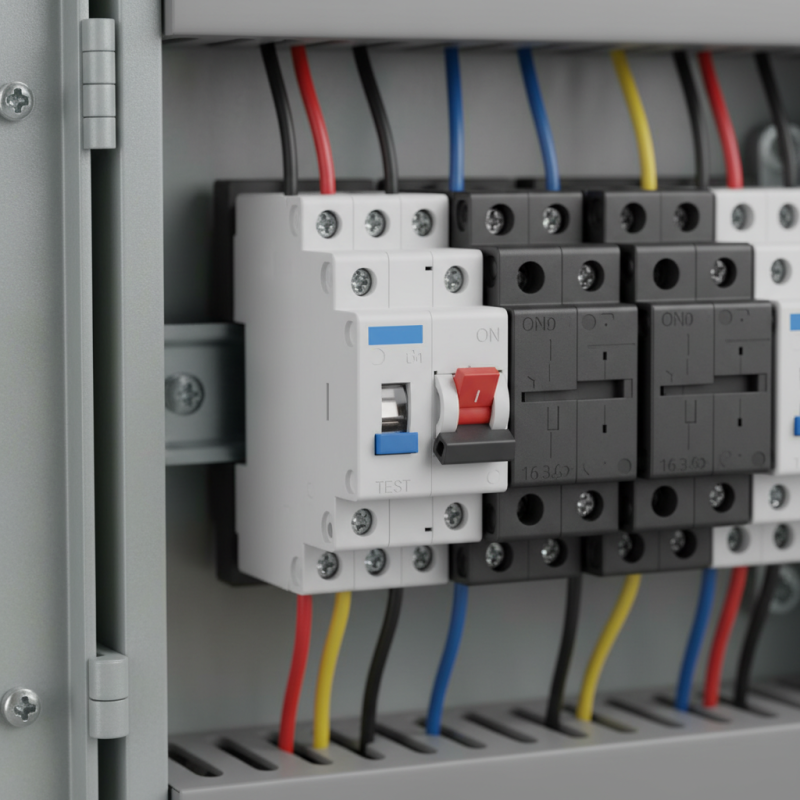
A miniature circuit breaker (MCB) is an essential component in electrical systems. It protects your circuits from overloads and short circuits. Its compact design allows for easy installation in electrical panels. When the current exceeds a set limit, the MCB will automatically switch off. This prevents potential damage to appliances and reduces fire hazards.
Tips: Regularly test your MCB. A simple push of the test button can ensure it functions properly.
MCBs operate using a bimetallic strip or electromagnetic mechanism. When current flows normally, everything stays stable. However, if an overload occurs, the heat generated bends the strip and triggers the switch. This process happens in a matter of milliseconds. Sometimes, it can be frustrating to reset an MCB after a trip. It’s important to identify the cause before resetting it.
Tips: Don’t ignore frequent trips. They indicate a larger problem in your electrical system. Addressing it sooner can save you time and money.
The Components of a Miniature Circuit Breaker
Miniature Circuit Breakers (MCBs) are essential for electrical safety. Understanding their components helps us appreciate their functionality. An MCB mainly consists of three crucial parts: the operating mechanism, the trip unit, and the contacts.
The operating mechanism, often spring-loaded, is responsible for the quick disconnection of current when a fault occurs. This feature minimizes damage and enhances safety. According to the International Electrotechnical Commission (IEC), MCBs can automatically disconnect circuits in microseconds. This rapid response is crucial for preventing electrical fires. Additionally, the trip unit can be thermal or magnetic. Thermal trip units respond to overcurrent caused by overloads, while magnetic trip units respond to short circuits.
Contacts are the gatekeepers that manage the flow of electricity. Upon activation, these contacts separate, stopping current flow. They are made of durable materials to ensure longevity. In some cases, contacts may wear out or fail, leading to performance issues. Regular inspection and maintenance are vital. Reports indicate that nearly 15% of electrical failures in industrial settings result from faulty circuit breakers. Ensuring that MCB components are in good condition is crucial for reliable operation. This highlights an area that requires attention for both safety and efficiency in electrical installations.
What Is a Miniature Circuit Breaker and How Does It Work? - The Components of a Miniature Circuit Breaker
| Component | Function | Material | Typical Ratings |
| Operating Mechanism | Trips the circuit when overload or short circuit occurs | Plastic, Metal | 6A to 125A |
| Bimetallic Strip | Detects overload condition by bending due to heat | Copper, Aluminum | 10A to 32A |
| Electromagnetic Coil | Triggers the breaker under short circuit conditions | Copper wiring | 20A to 100A |
| Switch | Manually opens or closes the circuit | Plastic, Metal | Varies by application |
| Terminal Block | Connects wires to the breaker | Copper, Aluminium | Compatible with various wire sizes |
How Miniature Circuit Breakers Function in Electrical Systems
Miniature Circuit Breakers (MCBs) are crucial in modern electrical systems. They protect circuits from overloads and short circuits. According to the International Electrotechnical Commission, MCBs can reduce electrical faults by almost 30%. This statistic highlights their importance in residential and industrial applications.
When an overload occurs, MCBs automatically disconnect the circuit. They use a thermal or magnetic mechanism to detect faults. The thermal part reacts to heat generated by excessive current. This mechanism may not be instant. It requires careful calibration to avoid nuisance tripping. Nuisance tripping can lead to downtime and frustration, especially in sensitive environments.
In contrast, the magnetic mechanism provides fast response times for short circuits. This quick action prevents potential hazards such as fires. However, the calibration of these devices can be tricky. An over-sensitive MCB may trip too often, disrupting operations. Finding the right balance is essential for optimal performance. In a survey by the World Electrical Committee, up to 15% of users reported issues with MCB reliability. These insights suggest the need for ongoing evaluation and improvement in MCB technology.
Types of Miniature Circuit Breakers and Their Applications
Miniature circuit breakers (MCBs) are essential in electrical systems. They protect circuits from overloads and short circuits. Different types of MCBs exist, each with specific applications across residential and industrial sectors.
There are three main types of MCBs: Type B, Type C, and Type D. Type B MCBs trip at 3 to 5 times the rating. They are suitable for residential applications, protecting lighting and socket circuits.
In contrast, Type C MCBs trip at 5 to 10 times the rated current. They are ideal for commercial settings, robustly handling inductive loads.
Type D, with a trip range of 10 to 15 times the rating, suits heavy industrial applications, such as transformers and electric motors.
According to the National Electrical Manufacturers Association (NEMA), MCB installations have significantly increased, enhancing safety in electrical systems.
However, the selection of the wrong MCB type can lead to issues. A Type B MCB in an industrial setting might trip frequently, disrupting operations. Likewise, overloading Type D MCBs can result in costly downtime. Statistics indicate that 70% of electrical failures arise from improper circuit protection. Users must carefully assess their specific needs and choose MCBs wisely to ensure safety and reliability.
Benefits of Using Miniature Circuit Breakers Over Fuses
Miniature Circuit Breakers (MCBs) are gaining popularity in electrical systems. They offer several advantages over traditional fuses. MCBs are designed to automatically switch off in case of an overload or short circuit, which provides instant protection. According to the International Electro technical Commission, MCBs can reset themselves after the fault is cleared, saving both time and money.
Fuses require replacement after a fault occurs. This can lead to inconvenience and increased downtime. The National Electrical Manufacturers Association reports that MCBs last longer than fuses. They withstand repeated faults without needing replacement. Additionally, MCBs provide a more precise tripping mechanism, which reduces the risk of nuisance tripping. This is critical in environments where continuous operation is vital.
MCBs are also more compact than fuses. This allows for better space utilization in electrical panels. However, some users might find the initial costs higher, as MCBs can be more expensive upfront. Yet, their longevity and reliability may justify the investment over time. The shift toward MCBs reflects a broader trend in electrical safety and efficiency, but there remain challenges. Understanding these devices fully is crucial for maximizing their benefits.