What is a PLC Control System and How Does it Work?
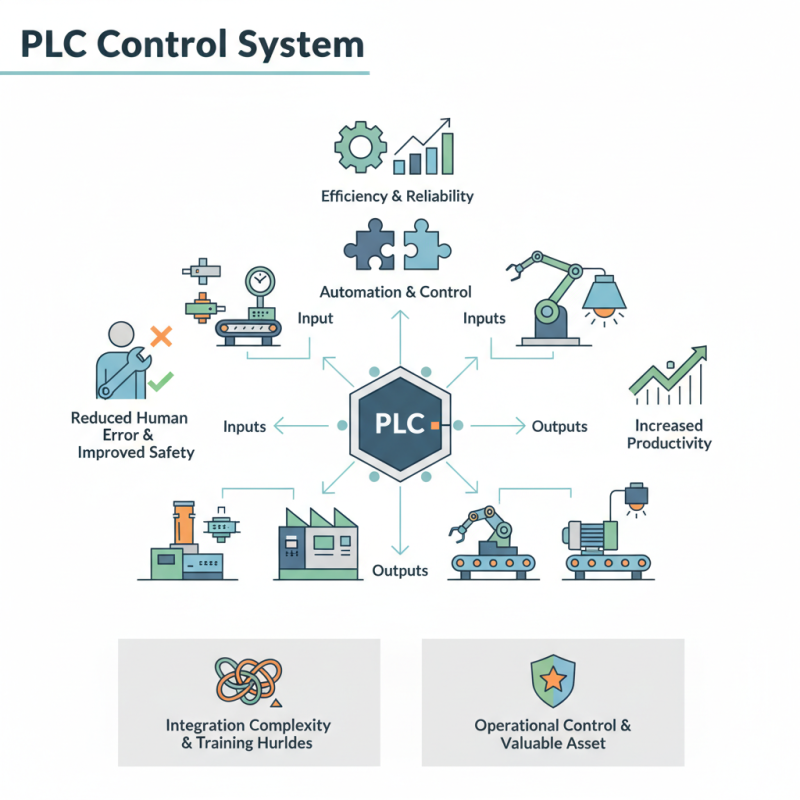
In today's industrial landscape, a PLC control system plays a crucial role in automation. This technology offers precise control over various processes, enhancing efficiency and reliability. As businesses shift towards automation, understanding how a PLC control system works becomes essential.
A PLC, or Programmable Logic Controller, is designed to handle multiple inputs and outputs simultaneously. It processes information in real-time, ensuring that machinery operates smoothly. With a PLC control system, industries can streamline operations, reduce human error, and improve safety protocols.
However, implementing a PLC control system isn't without challenges. Integrating new technology can be complex and sometimes requires training. Users often face difficulties in programming and troubleshooting. Despite these hurdles, the advantages of increased productivity and operational control make the PLC control system a valuable asset in modern manufacturing.
What is a PLC Control System?
A PLC, or Programmable Logic Controller, is a type of digital computer used to control machinery and various processes in industrial environments. It takes input from sensors and makes decisions based on programmed logic, controlling outputs like motors and lights. Unlike traditional relay-based systems, PLCs offer flexibility and quicker response times. They can be reprogrammed as processes change, which saves time and reduces costs.
PLCs are crucial in manufacturing plants and assembly lines. They handle tasks such as monitoring temperature, controlling conveyor belts, and managing robotic arms. This automation improves efficiency and reduces human error.
However, PLCs require careful programming. An error in logic can lead to significant operational issues.
Despite their advantages, PLCs can be complex.
Understanding their programming and functions might take time. There's also a learning curve for technicians and engineers. While these systems can greatly enhance productivity, they can frustrate those unfamiliar with programming logic.
Regular maintenance and updates are essential to keep PLCs running smoothly.
Key Components of a PLC Control System
A PLC control system comprises several key components that work together to automate processes. Central to this setup is the PLC itself. It functions as the brain, processing inputs and generating outputs. According to industry data reports, up to 72% of manufacturing facilities utilize PLCs for automation, showcasing their importance for efficiency.
Input devices, such as sensors and switches, communicate with the PLC. These devices collect data about temperature, pressure, or position, transforming physical phenomena into electrical signals. Output devices, including motors and actuators, perform actions based on PLC commands. This relationship between sensors and actuators enables precise control over machinery.
Communication is also vital. Many PLC systems use protocols such as Ethernet/IP or Modbus to share data. This networking capability enhances system integration, enabling real-time monitoring. Experts suggest that effective communication can reduce downtime by up to 40%. Yet, security remains a challenge, with vulnerabilities potentially exposing systems to cyber threats. Addressing these concerns is crucial for a stable and secure automation framework.
How PLCs Process Inputs and Outputs
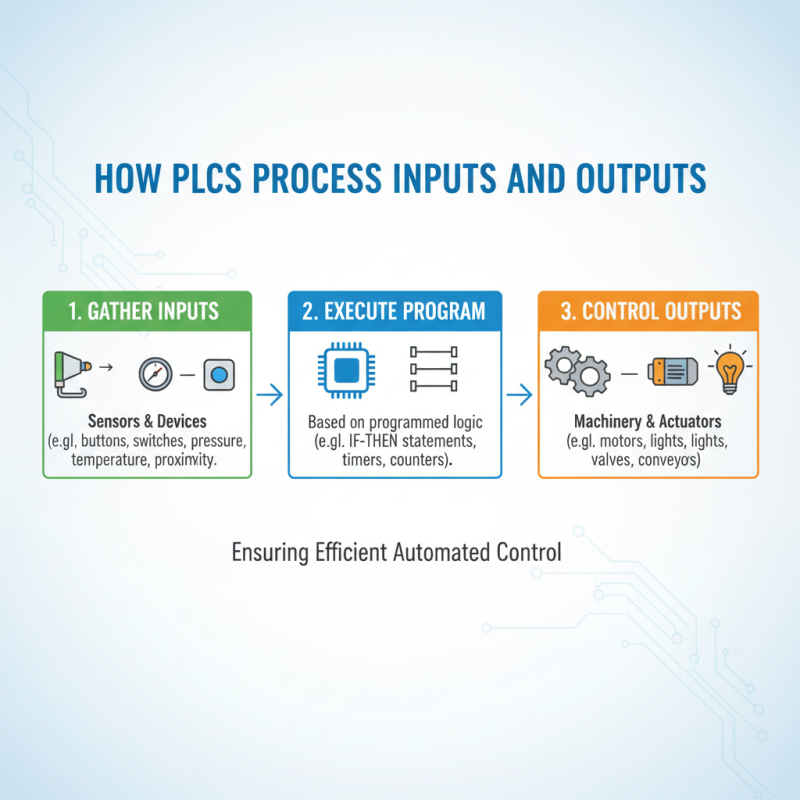
A Programmable Logic Controller (PLC) is essential for automated systems. PLCs process inputs and outputs through a systematic approach. They gather data from sensors and devices, then execute programmed instructions. This process ensures efficient control of machinery.
PLCs receive input signals from various sources. Sensors, switches, and other devices send information to the PLC. The controller processes these signals and makes decisions based on pre-defined logic. For instance, if a temperature sensor detects a high value, the PLC can activate a cooling system.
One critical aspect is the output phase. Once the PLC processes input data, it sends signals to actuators, motors, and other devices. This results in physical actions, such as turning on a conveyor belt. Each action is based on the input data received.
Tip: Regularly test your PLC system. Identifying issues early helps in maintaining efficiency. Also, document any changes made to the programming. This ensures easier troubleshooting later.
Input and output processing in PLCs is pivotal. However, programming errors can occur. It’s essential to verify logic and monitor outcomes closely. Doing so helps maintain reliability in your automated processes.
Tip: Use simulation tools to test your PLC programs. This practice can highlight potential flaws before live implementation.
Applications of PLC Control Systems in Industry
PLC control systems are widely used across various industries due to their flexibility and reliability. According to a 2021 report by IDC, the global PLC market is expected to grow at a CAGR of 6.5%, reaching approximately $14 billion by 2025. This growth reflects the increasing adoption of automation in manufacturing processes. Industries such as automotive, food and beverage, and pharmaceuticals heavily rely on PLCs to enhance operational efficiency.
In the automotive sector, for instance, PLCs manage complex assembly lines. They help streamline processes, reducing downtime and ensuring high precision. A study from McKinsey & Company shows that manufacturers can achieve a 30% increase in productivity by implementing advanced automation systems, including PLCs. In the food industry, PLCs regulate packaging and conveyor systems, ensuring product quality and safety. This is crucial, as even minor errors can lead to significant losses or product recalls.
Nevertheless, the integration of PLC systems is not without challenges. Many companies face issues like compatibility with legacy systems, which can hinder performance. Moreover, personnel training is often inadequate, leading to operational inefficiencies. Addressing these issues requires ongoing evaluation and adaptation of skills in the workforce. Investing in technology is essential, but it's equally important to focus on the people who operate it.
Benefits of Using PLC Control Systems in Automation
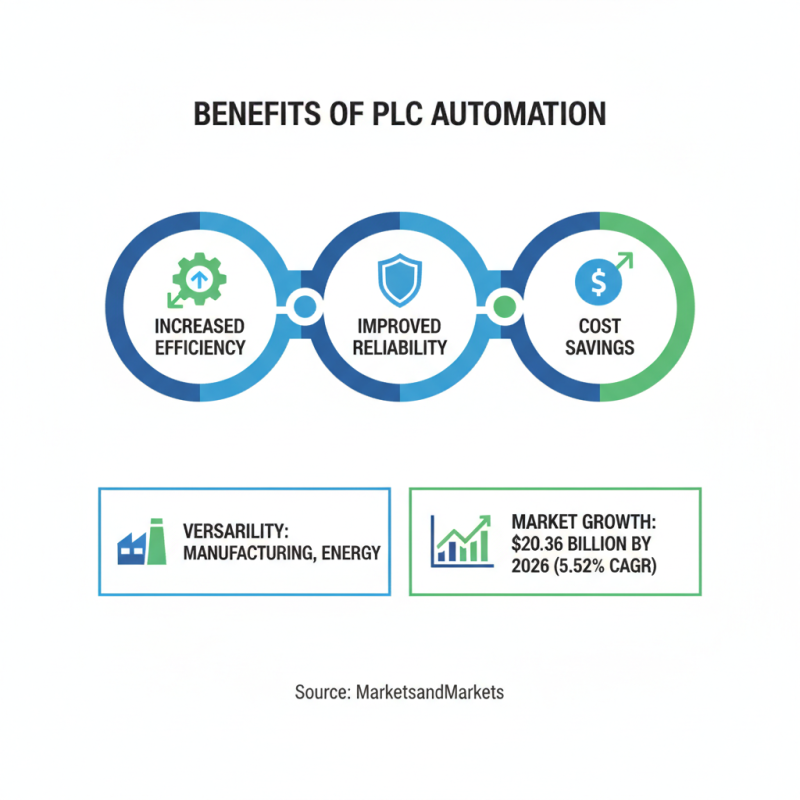
PLC control systems have become essential in modern automation. Their ability to manage complex processes efficiently is widely recognized. According to a report by Markets and Markets, the global PLC market is projected to reach $20.36 billion by 2026, growing at a CAGR of 5.52%. This growth is due to the increasing demand for automation in various industries, such as manufacturing and energy.
One significant benefit of PLC systems is their reliability. They can operate in harsh environments and have a long lifespan, often exceeding 10 years. This reduces the need for frequent replacements and maintenance. Furthermore, PLCs offer flexibility. Operators can easily modify programs, adapting to changing production requirements without extensive downtime. This flexibility can lead to significant cost savings.
Tip: Ensure your staff is well trained in PLC programming to maximize efficiency.
Another advantage is real-time monitoring. PLCs provide immediate feedback, allowing quick adjustments during operations. This responsiveness enhances productivity and minimizes errors. However, integrating PLCs can be challenging. Businesses need to evaluate compatibility with existing systems carefully.
Tip: Conduct a feasibility study before upgrading or integrating a PLC system.
In conclusion, PLC control systems are crucial in automation. Their benefits include reliability, flexibility, and real-time monitoring. As industries evolve, embracing PLC technology can lead to substantial improvements in operational efficiency.