Top 10 Automation Solutions from China for Global Buyers?
In the rapidly evolving landscape of automation solutions, China's contribution has been noteworthy. According to a report by the International Federation of Robotics, global sales of industrial robots reached 486,000 units in 2020, with a significant share stemming from Chinese manufacturers. This highlights China's growing importance in this industry. Automation solutions are no longer just about efficiency; they are about redefining how businesses operate and compete.
Expert in automation technology, Dr. Li Wei, emphasizes this shift, stating, "Automation solutions are key to unlocking the next wave of productivity." This insight reflects the prevailing sentiment among industry leaders. With global buyers increasingly looking to China for innovative automation solutions, there are vast opportunities and challenges. The quality of these solutions can vary, requiring careful evaluation.
Despite the impressive advancements, not all automation products meet the highest standards. Some may lack reliable support or scalability. Buyers must remain vigilant, as the market is not without its pitfalls. Understanding the nuances of these automation solutions is essential for making informed choices in a competitive marketplace.

Top Automation Solutions from China: An Overview of Market Leaders
China's automation market is on the rise, driven by rapid technological advancements. According to a report by the International Federation of Robotics, China is now the largest market for industrial robots, accounting for over 36% of global installations in 2022. This reveals the country's pivotal role in shaping the future of automation solutions.
Innovative companies are focusing on smart manufacturing technologies. These include collaborative robots, advanced sensors, and AI-driven applications. Data shows that investments in automation technologies could increase productivity by up to 30%. However, buyers must navigate the rapidly changing landscape carefully. Not all solutions provide the expected return on investment.
Tip: Always assess the scalability of automation solutions. Choose systems that can grow with your company's needs. This ensures you won't be left with obsolete technology as your operations expand.
Emerging technologies also pose challenges. Quality control and integration into existing systems can be complex. Reports suggest that over 40% of businesses experience difficulties during implementation. Automation isn’t a one-size-fits-all solution. Understanding specific operational needs is vital for success.
Tip: Conduct a thorough needs assessment before investing. Engage with experts who understand both technology and industry-specific requirements. This approach can help avoid costly mistakes.
Emerging Technologies in Chinese Automation Solutions: Trends and Insights
The automation landscape in China is evolving rapidly. Recent data from the China Academy of Information and Communications Technology (CAICT) indicates that the country's automation sector is expected to grow at a compound annual growth rate (CAGR) of 22% through 2025. This growth is driven by advancements in artificial intelligence, robotics, and IoT technologies. These emerging technologies are reshaping manufacturing processes, making them more efficient.
Many industries face a challenge in adopting automation solutions. Reports suggest that while 68% of manufacturers recognize the potential benefits, only 34% have fully integrated automation. This gap indicates a need for education and investment. Companies need to understand not just the tools but the broader implications of automation on workflow and workforce dynamics. As automation technologies become more accessible, suppliers must also address concerns about reliability and integration capabilities.
Emerging trends like edge computing and flexible robotic systems are key areas of focus. Research from McKinsey highlights that these innovations can reduce operational costs by up to 30%. However, businesses must also evaluate the long-term implications of these technologies on their existing operations. Many organizations are grappling with how best to transition, showcasing a landscape ripe for experimentation and refinement.
Comparison of Automation Solutions: China vs Global Competitors
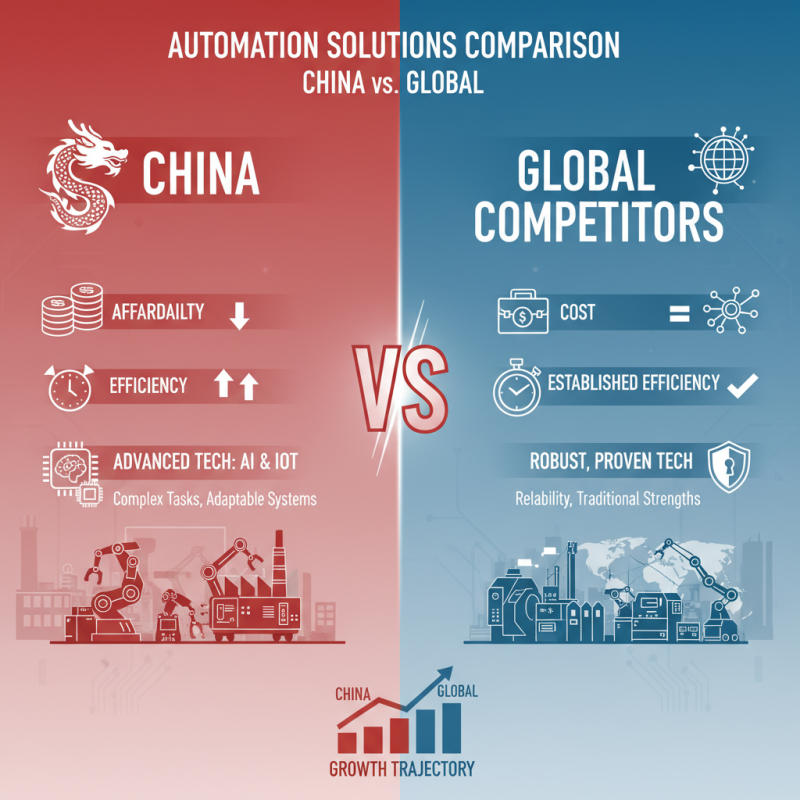
As automation technology rapidly evolves, China's solutions are gaining attention. Many global buyers are drawn to the affordability and efficiency of these options. Chinese automation tools often feature advanced technology, such as AI and IoT. This creates systems that can handle complex tasks and adapt to changing environments.
However, one must consider the challenges that come with these solutions. Quality control can vary among Chinese manufacturers. Reliability may not always meet global standards. Integration with existing systems can also pose difficulties. For some, these factors offset the initial cost benefits. Buyers should conduct thorough evaluations and seek feedback from other users.
Comparing Chinese automation solutions with global competitors reveals distinct differences. While Chinese products may excel in price, established brands often provide better support and warranty terms. The choice ultimately hinges on individual business needs and risk tolerance. Balancing cost against potential limitations is crucial for informed decision-making.
Industry-Specific Applications of Chinese Automation Technologies
The adoption of automation technologies in various industries marks a significant shift in operational efficiency. Many Chinese automation solutions target sectors such as
manufacturing, logistics, and agriculture. These technologies enhance productivity by streamlining processes. For instance,
smart manufacturing systems utilize robotics to reduce human error. This integration allows factories to maximize output while minimizing costs.
In logistics, automated warehouse management is transforming inventory handling. Robots move goods more swiftly and accurately than manual labor. This advancement leads to quicker delivery times and improved customer satisfaction.
Agricultural automation solutions, such as precision farming technologies, optimize resource use. They help farmers make data-driven decisions for higher yields and sustainable practices.
Tips: Consider the scalability of automation solutions. A solution suitable for a small company might not fit a larger enterprise. Assess your unique needs before investing.
Evaluate technologies for their adaptability across different industries.
Flexibility is crucial for long-term success in an ever-evolving market landscape.
Keep an open mind about potential challenges, and remain adaptable to changes in technology.
Market Growth and Future Projections for China's Automation Sector
The automation sector in China is experiencing rapid growth. Analysts project a significant increase in market demand over the next five years. This change is driven by both domestic needs and global market trends. Automation improvements enhance efficiency and reduce labor costs. As companies strive for innovation, technology adoption becomes crucial.
Investments in artificial intelligence and robotics are reshaping the industry. Manufacturers are integrating smart solutions to optimize production. However, challenges remain. There is often a skills gap within the workforce, hindering smoother implementation. Companies must focus on training and development to fully leverage automation benefits.
Market projections indicate a strong upward trend in exports of automation solutions. This presents an opportunity for global buyers, but they must navigate a diverse landscape. Understanding local regulations and standards is vital. Competitive pricing and quality assurance will also influence buying decisions. Embracing these aspects will be crucial for international partnerships in the automation sector.