Why Is Material Handling Automation Important?
Why Is Material Handling Automation Important?
Material handling automation has moved from a specialist investment to a practical operating priority. Warehouses now face higher order volumes, labor shortages, tighter delivery windows, and constant pressure to reduce errors. Conveyor systems, autonomous mobile robots, automated storage, and warehouse software can coordinate cartons from receiving to dispatch. The result is visible on the floor: fewer manual walking hours, steadier picking rates, and better inventory control.
Industry data supports this shift. MHI’s 2024 Annual Industry Report found that 55% of supply chain professionals planned to increase technology investment during the following two years. The report also identified robotics, automation, and artificial intelligence as major areas of adoption. DHL’s 2024 Trend Report, “AI in Logistics,” described artificial intelligence as a growing force across forecasting, warehouse operations, and transportation planning. These findings show momentum, not guaranteed success.
John Paxton, former president and CEO of MHI, has emphasized that “the supply chain is no longer a cost center; it is a competitive advantage.” That idea explains why material handling automation matters beyond labor savings. It can improve throughput, workplace consistency, traceability, and customer responsiveness. Yet automation is not a magic switch. Poor layouts, weak data, or unsuitable equipment can create expensive bottlenecks. Some facilities may need better processes before new machines. Others may discover that a hybrid workforce performs best. The thoughtful question is not whether to automate everything, but where automation creates measurable, reliable value.
What Is Material Handling Automation?
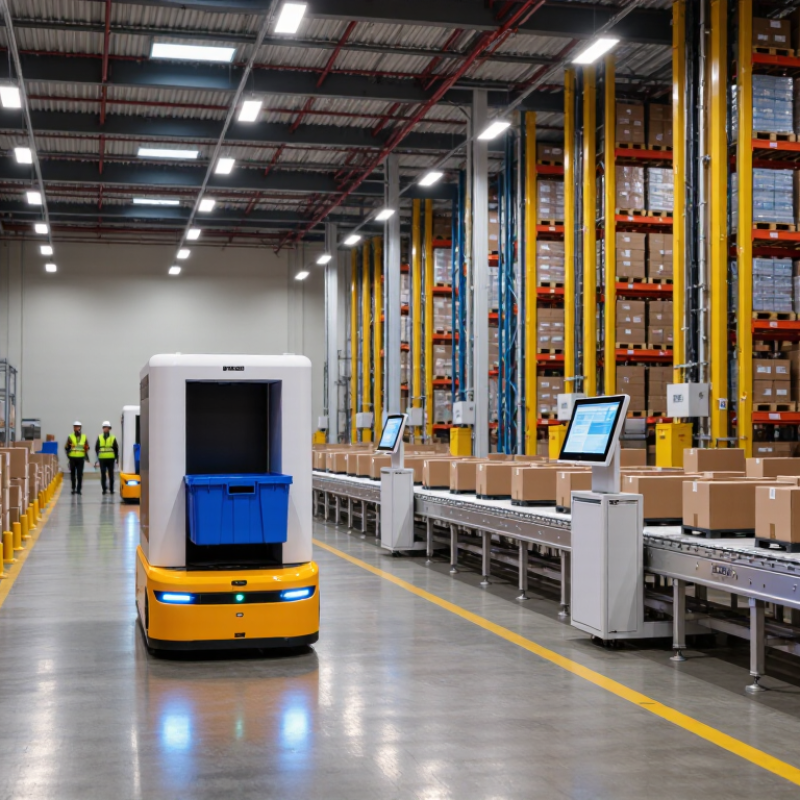
Material handling automation means using machines, software, and sensors to move, store, sort, and track materials. It covers conveyors, automated storage systems, robotic arms, guided vehicles, and warehouse control software. These tools connect receiving docks with storage locations and packing stations. Data directs each movement. Human workers still supervise exceptions, quality checks, and maintenance.
The scale is growing. The International Federation of Robotics reported 541,302 industrial robots were installed worldwide in 2023. That figure includes many manufacturing tasks, not only material handling. Still, it shows how quickly automated movement is entering industrial operations. MHI’s 2024 Annual Industry Report also identifies labor availability and technology investment as continuing supply-chain concerns. Automation can reduce repetitive lifting, shorten travel distances, and improve inventory visibility.
A practical system might scan a carton, assign a location, and send it through a conveyor within seconds. It can also record delays, empty slots, and damaged packaging. Yet automation is not magic. Poor layouts create faster mistakes. Bad inventory data can misdirect every movement. A pilot area, clear safety controls, and human review are necessary before wider deployment. The expensive part is often integration. That deserves more attention.
How Does Material Handling Automation Work?
Material handling automation connects software, machines, and people to move goods through a facility. Its purpose is simple: place the right item in the right location at the right time. In practice, the process begins with inventory data from a warehouse management system. Orders are then converted into movement instructions. Sensors, scanners, conveyors, lifts, and mobile robots carry out these instructions.
The system constantly checks location, weight, speed, and equipment status. A scanner may read a carton code at receiving, while sensors confirm that the carton reached the correct storage lane. If an obstacle appears, mobile equipment can slow down or stop. Programmable controls coordinate motors and transfer points, reducing collisions and unnecessary travel. Human workers still handle exceptions, inspections, maintenance, and tasks requiring judgment.
Good automation depends on accurate data and disciplined processes. A poorly labeled carton can disrupt an entire flow. That part is often underestimated. Reliable systems also need routine testing, clear safety zones, emergency controls, and trained operators. Engineers usually review performance through throughput, error rates, downtime, and order accuracy. These measurements reveal whether automation is solving a real problem or merely adding complexity.
Automation is not magic. It can reduce lifting, shorten travel distances, and improve consistency, but it cannot repair weak planning. Facilities should begin with observed work patterns, not impressive equipment. A smaller, well-tested system may perform better than a large installation designed around assumptions. Mistakes will still occur. The important question is whether the system detects them early and supports a safe, practical correction.
Which Tasks and Systems Can Be Automated?
Material handling automation matters because warehouses now move more goods with fewer dependable labor hours. MHI’s 2024 Annual Industry Report found that 55% of supply chain professionals were increasing technology investment. The pressure is practical, not theoretical.
Which tasks can be automated? Receiving systems can scan cartons, verify quantities, and direct pallets to storage. Automated storage and retrieval systems handle dense putaway and replenishment. Conveyors and autonomous mobile robots can move totes between workstations, while robotic arms support palletizing and depalletizing. Vision systems can inspect labels and detect damaged packaging. Picking, sorting, packing, cycle counting, and returns processing also fit automation when product shapes remain predictable.
The software layer matters just as much. Warehouse management systems can release orders, track inventory, and coordinate labor. Warehouse execution systems can balance conveyors, robots, and manual stations in real time. The International Federation of Robotics reported 553,052 industrial robots were installed worldwide in 2022, showing broader acceptance of robotic work. Yet automation is not a cure-all. Poor slotting still creates long travel paths. Glare can confuse barcode readers. During one warehouse pilot, irregular cartons caused repeated manual intervention. That failure was useful. It exposed weak packaging standards before a larger investment. Human oversight remains essential for exceptions, safety checks, and decisions involving uncertain products.
What Are the Main Benefits of Material Handling Automation?
Material handling automation improves how products move, wait, and arrive inside a warehouse. Conveyor systems, automated storage, and guided vehicles can reduce walking, lifting, and repetitive reaching. Workers spend less time searching for cartons and more time managing exceptions. This can improve throughput, order accuracy, and workplace safety. A misplaced scan still causes trouble, though. Automation reduces many errors, but it does not remove the need for trained people and clear procedures.
Tips: Begin with a process map. Measure travel distance, picking time, damage rates, and peak-hour demand. Choose automation for the real bottleneck, not the most impressive machine. Leave enough space for maintenance and safe human access. Review the data weekly after installation. Small adjustments often create larger gains than expensive upgrades.
Another benefit is consistency. Automated equipment can perform repeated movements at a steady pace, even during busy periods. Sensors and software also create useful records about delays, inventory movement, and equipment performance. Managers can use these records to plan labor and respond earlier to problems. However, integration may be difficult when older systems are involved. I have found that practical testing matters more than optimistic forecasts. A pilot area may reveal noise, awkward handoffs, or unexpected downtime. These details are easy to overlook, but they strongly influence reliability and long-term value.
What Factors Guide Its Selection and Implementation?
Material handling automation matters because it can reduce repetitive lifting, misplaced inventory, and avoidable travel time. However, selecting the right system requires more than counting boxes. A warehouse must examine product size, weight, fragility, storage density, order frequency, and seasonal changes. A fast conveyor may suit steady cartons, but it can struggle with irregular items. The cheapest option is rarely the safest long-term choice.
Available space is another practical factor. Measure aisle width, ceiling height, floor strength, emergency access, and maintenance areas before approving equipment.
Data quality also matters. Inaccurate stock records can make advanced automation perform badly. Start with reliable workflow data, not optimistic assumptions. Small pilot tests often reveal jams, awkward handoffs, and training gaps that planning documents miss.
Implementation should include operators, maintenance staff, safety specialists, and information technology teams. Their experience can expose problems early. Interfaces should be clear, and manual recovery procedures must be practiced. Staff need training before the system becomes fully operational.
Performance should be tracked through throughput, error rates, downtime, energy use, and workplace incidents. Yet these measures need context. A higher output rate may hide growing maintenance costs or employee frustration.
I have seen projects focus heavily on speed and overlook cleaning access. That mistake can weaken reliability. Automation also needs room to adapt, because product lines, labor patterns, and customer expectations rarely remain stable.