What is the Best PLC System for Industrial Automation?
In the rapidly evolving landscape of industrial automation, the choice of the best PLC system is crucial. Renowned expert Daniel J. Primo, a leader in factory automation, once noted, "The right PLC system can significantly enhance operational efficiency." His insights underline the importance of selecting an optimal PLC system for modern industry.
Various factors influence the effectiveness of a PLC system. Companies often struggle to balance complexity and cost. Some systems boast advanced features but may exceed the skills of the current workforce. Moreover, not every industry requirement is the same. What works for one may not suit another. This variability can lead to costly mistakes if companies do not evaluate their unique needs.
The search for the ideal PLC system must be grounded in concrete knowledge. Understanding the specifications and capabilities of different options helps clear confusion. Testing various solutions can also reveal limitations. Experts stress that hands-on experience often uncovers challenges not identified in manuals. Thus, thorough research and practical trials are essential for making informed decisions in the selection process.

What are PLC Systems and Their Role in Industrial Automation?
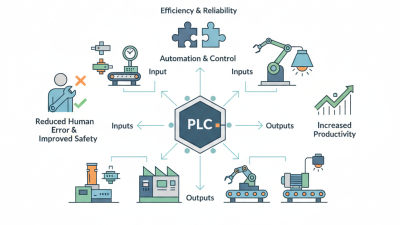
PLC systems, or Programmable Logic Controllers, have become essential in industrial automation. They serve as the backbone for controlling machinery and processes across various sectors. In fact, research indicates that the global PLC market is expected to reach approximately $22 billion by 2025, reflecting an increasing reliance on automation and smart technologies.
PLC systems streamline operations by executing a predefined set of instructions to manage inputs and outputs in real-time. Data from industry analysts suggest that around 60% of manufacturing companies are adopting PLCs to enhance operational efficiency. These systems minimize human error and increase precision in processes, contributing to a more reliable production output. However, implementing PLC systems is not always straightforward. Organizations often face challenges related to system integration and employee training.
The versatility of PLC systems allows for adaptation to diverse environments, from automotive to food processing. Yet, some leaders overlook the need for regular updates and maintenance. This can lead to vulnerabilities and potential breakdowns, impacting productivity. Studies show that 70% of companies prioritize automation upgrade delays, resulting in missed efficiency gains. As industries continue to evolve, the importance of understanding and investing in PLC systems cannot be overstated.
Key Features to Evaluate in a PLC System for Effective Automation
When evaluating the best PLC system for industrial automation, several key features require careful consideration. A fundamental aspect is the system's input/output (I/O) capabilities. Effective automation demands a diverse range of I/O options. Systems should be compatible with various sensors and actuators to ensure seamless integration. Modularity can also enhance flexibility, allowing for system upgrades as needs evolve.
Reliability is crucial in any PLC system. Industrial environments often expose systems to harsh conditions. A robust PLC must withstand temperature variations, humidity, and electrical noise. It’s essential to consider how well the system performs under stress. A weak point may lead to costly downtimes. Evaluating the system's mean time between failures (MTBF) is a worthwhile practice.
Lastly, user-friendly software interfaces significantly impact operational efficiency. Complex programming may deter operators from maximizing the system's capabilities. Look for systems that offer intuitive programming options and comprehensive support resources. Still, not every feature is essential for every application. Reflecting on your specific needs is vital, as overcomplicating the system can lead to inefficiencies. Finding balance is key in selecting the right PLC for your operations.
Comparative Analysis of Leading PLC Brands in the Market
When selecting a Programmable Logic Controller (PLC) for industrial automation, comparing the leading brands is essential. Each brand has unique features that cater to different industrial needs. Some focus on advanced processing power, while others prioritize ease of programming. Understanding these nuances can significantly impact the efficiency of automation projects.
Key considerations include the user interface, available protocols, and expansion capabilities. A user-friendly interface helps operators navigate systems easily. In contrast, robust communication protocols ensure seamless connectivity between devices. Additionally, expansion capabilities determine how well the system can adapt to future needs. Often, businesses find themselves limited by a choice that didn’t account for growth.
However, not all PLC systems fit every operation perfectly. Some may offer exceptional features but come with complex programming that could hinder productivity. Others may be very reliable but lack flexibility. Identifying these trade-offs is crucial. Organizations must reflect on what aspects are non-negotiable for their scenarios. An informed decision leads to better performance and reliability in the long run.
What is the Best PLC System for Industrial Automation? - Comparative Analysis of Leading PLC Brands in the Market
| Feature |
Brand A |
Brand B |
Brand C |
Brand D |
| CPU Speed |
1 GHz |
800 MHz |
1.2 GHz |
900 MHz |
| I/O Capacity |
256 Inputs / 256 Outputs |
128 Inputs / 128 Outputs |
512 Inputs / 512 Outputs |
256 Inputs / 256 Outputs |
| Programming Languages |
Ladder, Function Block |
Ladder, Structured Text |
Ladder, Function Block, Structured Text |
Ladder |
| Communication Protocols |
Ethernet, RS-232 |
Ethernet, RS-485 |
Ethernet, CANopen |
Ethernet |
| Relative Cost |
$1500 |
$1200 |
$1800 |
$1600 |
Recent Trends and Innovations in PLC Technology for Industry 4.0
As we enter the era of Industry 4.0, the focus on programmable logic controllers (PLCs) has intensified. Recent reports indicate that the global PLC market is anticipated to reach $21 billion by 2025, driven by the demand for automation in manufacturing. Innovations in PLC technology are key to meeting this demand.
One transformative trend is the integration of IoT with PLCs. This fusion allows real-time data sharing and smart decision-making across systems. Reports suggest that by 2024, approximately 30% of industrial PLCs will include IoT capabilities. This shift enhances operational efficiency but also brings challenges. Security and interoperability issues need addressing to ensure seamless integration.
Moreover, cloud computing is revolutionizing PLC operations. Cloud-based PLCs facilitate remote access and management, making operations more agile. Industry surveys show that firms using cloud-enabled systems report up to a 25% reduction in operational costs. However, reliance on cloud technology requires a robust cybersecurity framework to protect sensitive data. This evolving landscape reflects the need for continuous improvement in PLC capabilities and a focus on reliable solutions for industrial automation.
Case Studies: Successful PLC Implementations in Various Industries
PLC systems are increasingly pivotal in various industries. For instance, in manufacturing, companies have deployed PLCs to automate assembly lines. One case study highlights a food processing plant that integrated PLCs to enhance speed and reduce errors. The results were significant, with productivity increasing by over 30%. However, the implementation faced challenges. Initial programming errors caused unexpected downtimes. This experience underscores the importance of thorough testing before full deployment.
In the chemical industry, PLCs are essential for monitoring complex processes. A notable case involved a large petrochemical facility. The plant transitioned from manual to automated processes using PLCs. This move improved precision in temperature control and mixing ratios. Yet, the switch was not seamless. Training staff on the new system was critical but often overlooked. Some employees struggled to adapt, leading to temporary setbacks. These stories showcase the critical balance between technological advancement and human adaptability in automation.
PLC System Implementation Success Across Industries
The chart below illustrates the successful implementation of PLC systems across various industries, showcasing the percentage of efficiency improvements observed after installation.