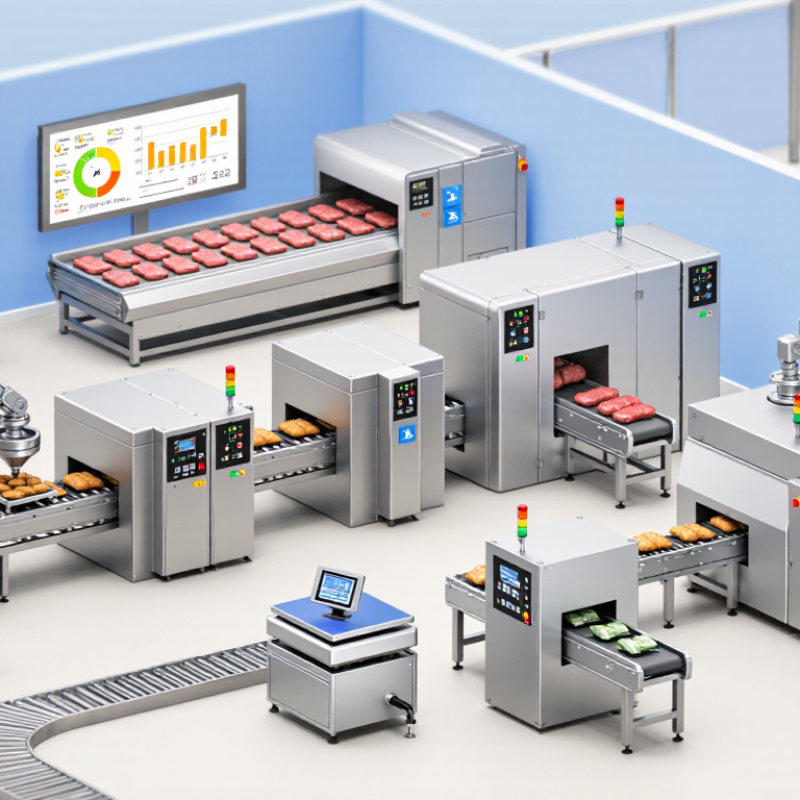
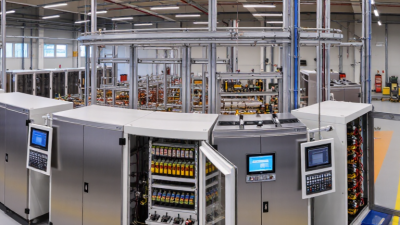
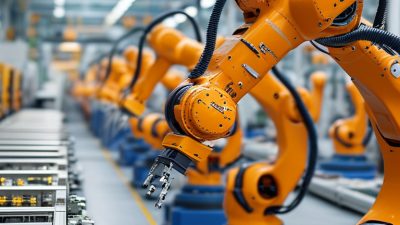
China’s food manufacturing sector is adopting food processing automation at remarkable speed. Plants now combine robotic handling, machine vision, digital weighing, and programmable control systems. These technologies support bakeries, beverage lines, meat processors, and packaged-food factories. They also address practical pressures, including labor shortages, product consistency, and stricter traceability expectations.
The most effective solutions are not always the most expensive. A reliable system may begin with automated filling, stainless-steel conveyors, and temperature monitoring. More advanced facilities connect sensors to manufacturing execution software. This allows managers to review production data, detect abnormal temperatures, and reduce avoidable downtime. Hygienic design remains essential. Smooth surfaces, controlled drainage, and accessible cleaning points can protect product quality during daily operations.
China offers both domestic equipment manufacturers and international technology suppliers. Their solutions vary in integration capability, after-sales service, validation support, and compatibility with existing machinery. Buyers should examine documented performance, maintenance response times, spare-parts availability, and operator training. A polished demonstration is useful, but it does not replace a factory trial. Reality is uneven. Some systems promise intelligent production but still depend heavily on manual adjustments.
This article reviews leading automation approaches used in China’s food processing industry. It considers equipment functions, application scenarios, investment factors, and implementation risks. The discussion also asks a harder question: does automation improve the whole process, or only one visible production stage? Careful evaluation matters. Food safety, worker protection, data reliability, and regulatory compliance should guide every decision. Automation should serve consistent manufacturing, not simply create an impressive dashboard.
What Are China Top Food Processing Automation Solutions?
Definition and Scope of Food Processing Automation in China
Food processing automation in China covers more than robotic arms. It includes automated handling, washing, cutting, mixing, cooking, filling, sealing, inspection, storage, and traceability. Systems may connect sensors, programmable controls, manufacturing software, and quality records across one production line.
The scope also includes clean-in-place systems, temperature monitoring, weighing, and warehouse movement. On a production floor, a sensor can detect an incorrect fill level within seconds. A vision system can identify damaged packaging without touching the product. These details matter in high-volume operations.
According to the International Federation of Robotics, China installed 276,288 industrial robots in 2023. It also reached 470 robots per 10,000 manufacturing employees. These figures cover all manufacturing, not food processing alone, but they show the country’s automation capacity. The United Nations Industrial Development Organization also links digital control with improved manufacturing consistency and resource efficiency.
Automation supports China’s food sector as labor costs, hygiene requirements, and product variety increase. Yet automation is not automatically intelligent. A conveyor can repeat errors faster. Poor sensor calibration may create false confidence. Smaller factories may also struggle with integration costs, maintenance skills, or old equipment. Practical solutions therefore combine mechanical reliability, operator training, data security, and local service support. The definition should remain broad, but not careless.
Food processing automation covers the use of sensors, PLC or DCS control, robotics, machine vision, digital traceability, and data systems across receiving, processing, packaging, quality control, and intralogistics. The chart maps the number of core automation functions commonly associated with each stage; it is a functional scope index, not a market-share estimate.
Typical functions include automated weighing, material conveying, recipe dosing, temperature and time control, cleaning-in-place monitoring, machine vision inspection, robotic packing, warehouse management, and batch traceability.
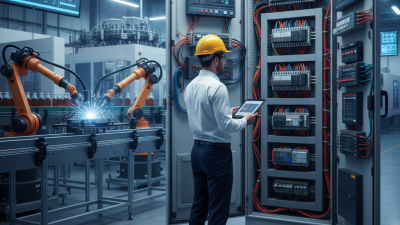
Modern Chinese food processing systems combine precise control, hygienic equipment, and real-time data. In plant assessments, programmable logic controllers often coordinate conveyors, filling units, mixers, and temperature zones. Their timing must remain stable during wet cleaning and frequent product changes.
Sensors measure temperature, pressure, weight, flow, and moisture. A supervisory control system turns these signals into useful production records. Machine vision checks package seals, labels, surface defects, and missing components. It can reject a damaged pouch within milliseconds. However, poor lighting still creates false alarms. That weakness requires careful testing, not blind trust.
Robotic handling is expanding in palletizing, sorting, and repetitive packing. Collaborative robots can reduce lifting injuries when safety controls are correctly configured. Industrial networks also connect machines with quality databases and maintenance dashboards. This supports traceability from raw material intake to finished cartons. Clean-in-place technology uses controlled water, chemicals, flow, and temperature to protect sanitation. Its performance depends on pipe design and verified procedures.
Chinese processors increasingly use edge computing and predictive maintenance. A vibration sensor may reveal a failing motor before production stops. Yet data integration remains difficult across older machines and new platforms. Engineers often need adapters, clearer naming rules, and better operator training. Automation improves consistency, but skilled human review still matters. Small errors can become expensive quickly.
Food processing automation in China increasingly connects separate production steps into one controlled workflow. At receiving stations, weighing systems record raw material weight, temperature, and delivery time. Vision inspection can identify bruised vegetables, damaged packaging, or inconsistent sizes before processing begins. This reduces waste, but sensors still need regular calibration.
During preparation, automated washers, peelers, cutters, and sorting conveyors improve consistency. Operators can adjust cutting thickness through a touchscreen while monitoring water flow and equipment pressure. Mixing systems manage recipes with measured ingredient dispensing. In cooking and baking areas, temperature probes track heating curves and help prevent underprocessing. Small errors matter.
Filling and sealing machines handle sauces, beverages, prepared foods, and other products at controlled speeds. Checkweighers remove packages outside the permitted weight range. Metal detection and seal inspection support food safety checks, while coding systems add batch details for traceability. Cold-storage automation then monitors temperature changes and alarm conditions. However, faster lines can expose weak cleaning routines. Equipment must allow practical access for sanitation, maintenance, and manual inspection. Automation supports skilled workers; it does not replace their judgment when materials behave unexpectedly.
China’s leading food automation solutions combine robotic picking, machine vision, automated weighing, filling, sealing, and digital production control. These systems help manufacturers improve throughput, hygiene, traceability, and product consistency. A 2023 Deloitte Smart Manufacturing survey found that 86% of manufacturers viewed smart operations as important for future competitiveness. Food plants reflect this pressure clearly. Customers expect safer products and faster delivery. Consistency matters.
Effective performance depends on more than installing robots. Sensors should monitor temperature, pressure, weight, and motor conditions in real time. Vision systems can detect damaged packaging or incorrect labels before shipment. Integrated MES and SCADA platforms connect production data with quality records. The International Federation of Robotics reported 553,052 industrial robots were installed worldwide in 2022. However, automation does not guarantee better results. Poor layouts, unstable recipes, or weak staff training can reduce OEE. That is an uncomfortable lesson.
Tips: Begin with one measurable bottleneck, such as repeated weighing errors or long changeovers. Track OEE, yield, downtime, energy use, and cleaning duration. Select equipment with washable surfaces and simple access points. Test data accuracy during wet, cold, and high-speed conditions. A pilot line is safer than a rushed factory-wide upgrade. Review the results honestly. Some manual tasks may still be more flexible for short production runs. According to FAO, roughly 13% of food is lost between harvest and retail, so better control can support waste reduction, but automation alone cannot solve every cause.
What Are China Top Food Processing Automation Solutions?
Selection Criteria for China’s Food Processing Automation Solutions
Selecting food processing automation in China requires more than comparing machine speed or purchase price. In practical plant evaluations, hygiene remains the first checkpoint. Equipment should use food-grade contact materials, smooth welds, sealed joints, and easy-to-clean surfaces. Dead corners can trap moisture and create costly sanitation problems. They matter.
The production environment also shapes the decision. A system for frozen dumplings needs different controls from one handling sauces or baked goods. Check temperature stability, dosing accuracy, conveyor synchronization, and resistance to washdown conditions. Automation should support traceability through batch records, alarm histories, and production data. Clear interfaces help operators respond quickly, especially during shift changes.
Integration deserves careful testing. Confirm whether the equipment can communicate with existing packaging, inspection, and warehouse systems. Local technical support, spare-part availability, and response time should appear in the evaluation, not remain verbal promises. Ask for documented acceptance tests using real product samples. Demonstrations with water or empty trays may hide problems.
A lower initial price can become expensive after repeated stoppages. Calculate labor savings, energy use, maintenance hours, and expected downtime. Training quality also affects the result. Even reliable automation may underperform when operators lack practical guidance. No selection is perfect. Product changes, cleaning habits, and uneven raw materials can still expose weaknesses after installation. Pilot testing is useful, but it cannot replace long-term operational review.
| Automation Solution | Typical Food Processing Applications | Core Technologies | Key Selection Criteria | Common Performance Indicators | Food Safety and Compliance Considerations | Suitability for Chinese Food Processing Plants |
|---|---|---|---|---|---|---|
| Automated Ingredient Weighing and Batching | Flour, sugar, starch, spices, liquid ingredients, premixes, sauces and beverage formulations. | Load cells, gravimetric feeders, barcode identification, recipe-management software and automatic dosing valves. | Weighing accuracy, recipe flexibility, dust control, batch-size range, ingredient traceability and ease of cleaning. | Typical weighing accuracy: approximately ±0.1% to ±0.5%, depending on material properties and equipment scale. | Hygienic equipment design, allergen segregation, batch records, calibrated scales and controlled access to recipes. | Suitable for plants handling multiple recipes, variable raw-material formats and frequent product changeovers. |
| Automated Mixing and Blending | Dough, batter, sauces, fillings, dairy products, powdered beverages, seasonings and nutraceutical formulations. | Programmable logic controllers, variable-frequency drives, temperature sensors, torque monitoring and automated recipe control. | Mixing uniformity, shear level, vessel capacity, temperature control, product viscosity and cleanability. | Batch cycle times commonly range from several minutes to more than one hour, depending on product and process design. | Smooth product-contact surfaces, hygienic welds, drainability, validated cleaning procedures and allergen-control capability. | Well suited to standardized recipes and high-volume production where consistency is more important than manual flexibility. |
| Continuous Thermal Processing | Pasteurization, sterilization, blanching, cooking, hot-water treatment and thermal treatment of liquid or semi-liquid foods. | Heat exchangers, temperature sensors, flow meters, automatic diversion valves and supervisory control systems. | Heating uniformity, residence-time control, energy efficiency, product fouling, throughput and automatic process verification. | Process temperature and holding time must be validated for the specific product, package and target microorganism reduction. | Critical control point monitoring, calibrated instruments, hygienic piping, traceable records and fail-safe product diversion. | Appropriate for beverages, sauces, dairy products and other products requiring repeatable thermal treatment. |
| Automated Filling and Sealing | Bottles, cans, pouches, trays, cups, jars, cartons and flexible packages for liquid, semi-liquid and solid foods. | Servo drives, volumetric or gravimetric filling, vision inspection, sealing-temperature control and automatic reject systems. | Filling accuracy, package size range, sealing integrity, changeover time, line speed and compatibility with packaging materials. | Filling accuracy and line speed vary significantly by product viscosity, package format and filling technology. | Seal integrity testing, controlled contact surfaces, hygienic zoning, foreign-material prevention and accurate date coding. | Suitable for high-volume production and plants that need consistent package weight and reduced manual handling. |
| Robotic Pick-and-Place and Case Packing | Bakery products, confectionery, frozen foods, snack products, cartons, trays and secondary packaging. | Delta or articulated robots, machine vision, vacuum or mechanical grippers, conveyor tracking and robotic programming. | Pick rate, product fragility, gripper hygiene, layout footprint, product changeover and integration with upstream equipment. | Delta robots can perform high-speed picking, while actual throughput depends on product spacing, packaging pattern and robot layout. | Food-grade contact materials, easy-to-clean end effectors, guarded work areas and controlled access to robotic cells. | Particularly useful where repetitive manual packing, labor shortages or ergonomic risks affect production efficiency. |
| Automated Inspection and Quality Control | Weight verification, foreign-object detection, fill-level checks, label inspection, seal inspection, color grading and defect detection. | Checkweighers, metal detectors, X-ray inspection, machine vision, hyperspectral imaging and reject mechanisms. | Detection sensitivity, false-reject rate, product speed, product variability, inspection coverage and data-recording capability. | Detection performance must be validated using product-specific test pieces, packaging formats and operating conditions. | Verification routines, electronic records, traceable rejection events, hygienic design and integration with hazard-control plans. | Recommended for export-oriented plants and products with strict weight, labeling, seal or foreign-material requirements. |
| Automated Cleaning-in-Place Systems | Tanks, pipelines, heat exchangers, fillers, mixers and other closed-process equipment. | Programmable cleaning sequences, conductivity sensors, temperature sensors, flow meters, chemical dosing and return monitoring. | Cleaning coverage, flow velocity, chemical concentration, water consumption, cycle time and validation documentation. | Cleaning parameters are product- and equipment-specific; flow, temperature, concentration and time should be monitored and recorded. | Hygienic piping, separation of cleaning and product circuits, chemical-control procedures and documented cleaning validation. | Highly suitable for liquid, dairy, beverage, sauce and other plants with extensive fixed piping and closed equipment. |
| Manufacturing Execution and Traceability Systems | Production scheduling, batch tracking, raw-material genealogy, quality records, downtime analysis and inventory coordination. | MES, industrial databases, barcode or RFID systems, OEE dashboards, electronic batch records and ERP integration. | Interoperability, data ownership, cybersecurity, offline operation, user permissions, reporting flexibility and implementation cost. | OEE is commonly calculated from availability, performance and quality; the calculation should use clearly defined plant data. | Audit trails, record retention, controlled user access, electronic approvals and reliable lot-level traceability. | Valuable for multi-line facilities, regulated products, private-label production and operations with complex supplier networks. |
| Automated Warehouse and Material Handling | Raw-material storage, pallet movement, finished-goods staging, cold-chain logistics and line-side replenishment. | Automated storage and retrieval systems, conveyors, autonomous mobile robots, palletizers, scanners and warehouse software. | Load capacity, temperature range, floor condition, aisle width, navigation reliability, inventory accuracy and maintenance support. | Throughput depends on travel distance, storage density, pallet dimensions, software logic and traffic management. | Lot control, temperature records, pest-control compatibility, hygienic zoning and prevention of product mix-ups. | Suitable for large distribution centers, cold stores and factories seeking lower forklift traffic and better inventory visibility. |
| Utilities and Energy Management Automation | Steam, compressed air, refrigeration, chilled water, wastewater treatment and electrical-energy monitoring. | Industrial meters, supervisory control systems, variable-speed drives, alarms, dashboards and demand-control logic. | Measurement accuracy, system integration, peak-demand control, maintenance requirements, data granularity and return on investment. | Useful indicators include energy per unit of product, water per unit of product, compressed-air leakage and refrigeration efficiency. | Reliable utility monitoring supports process control, sanitation verification, environmental management and corrective-action records. | Suitable for plants with high refrigeration, heating, drying, compressed-air or wastewater-treatment loads. |
| Predictive Maintenance and Industrial Analytics | Motors, pumps, conveyors, compressors, mixers, packaging machines and refrigeration equipment. | Vibration sensors, thermal monitoring, motor-current analysis, cloud or edge analytics and maintenance-management software. | Sensor reliability, alarm quality, data history, integration with maintenance workflows and staff capability. | Common monitored indicators include vibration, temperature, motor current, lubrication condition, downtime and mean time between failures. | Systems should not replace required safety inspections, calibration, sanitation checks or preventive-maintenance procedures. | Most beneficial where unplanned downtime causes significant product loss, cold-chain risk or production disruption. |
| Modular and Retrofit Automation | Existing production lines requiring upgrades to controls, sensors, inspection, conveyance, packaging or data collection. | PLC upgrades, servo systems, remote I/O, industrial networks, sensors, human-machine interfaces and standardized communication protocols. | Compatibility with existing equipment, production downtime during installation, spare parts, operator training and future scalability. | Expected improvements should be measured through baseline data such as downtime, labor hours, waste, throughput and changeover time. | The retrofit must preserve hygienic design, guarding, emergency-stop functions, validation records and food-contact requirements. | Often practical for established Chinese plants that need gradual modernization without replacing the entire production line. |