Manufacturing rarely fails in one dramatic moment. More often, a temperature drifts, a valve responds slowly, or a sensor reports an attractive but inaccurate reading. These small changes can spread across an entire production line. Process control helps manufacturers detect those changes and respond before quality, safety, or productivity suffers.
The value becomes clearer on a factory floor. A reactor may need to remain within a narrow temperature range. A packaging machine may require steady pressure and precise timing. Process control connects sensors, controllers, and equipment to maintain those conditions consistently. It can reduce scrap, stabilize output, protect machinery, and support safer decisions. It also gives operators useful evidence instead of relying only on experience or guesswork. That evidence matters during shift changes, maintenance reviews, and unexpected production losses.
As quality-engineering authority George Box famously said, “All models are wrong, but some are useful.” His warning applies directly to process control. A control strategy may perform well during normal operation, yet struggle with raw-material changes or equipment wear. No system is perfect. That is the uncomfortable part. Manufacturers must test assumptions, review historical data, and improve their controls over time. The strongest programs combine reliable instruments with trained people and disciplined procedures. They do not treat automation as magic. They treat it as a practical engineering responsibility. Understanding why process control matters therefore requires more than discussing efficiency. It requires examining how stable decisions are made, how errors are contained, and how continuous improvement becomes visible in daily production.
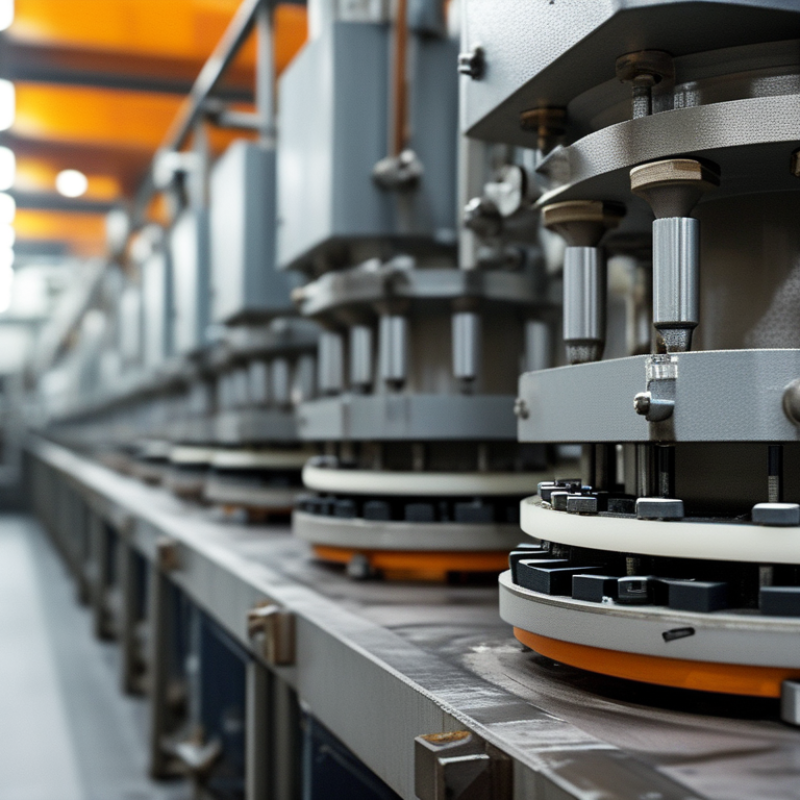
Process control in manufacturing means keeping production conditions within defined limits. It connects sensors, controllers, software, and operators across the production line. Temperature, pressure, flow, speed, and chemical concentration become measurable signals. A controller compares each signal with its target, then adjusts valves, motors, heaters, or pumps. Small corrections matter.
On a food line, a drifting temperature sensor can create uneven cooking. On a machining cell, vibration can increase tool wear and dimensional errors. Effective control detects these changes before defective products fill a pallet. It also records trends, alarms, and corrective actions, creating evidence for quality reviews. Yet a dashboard can look precise while a sensor is dirty. That weakness deserves attention.
The 2023 Deloitte Smart Manufacturing and Operations Survey found that 86% of manufacturers viewed smart manufacturing as important for competitiveness. The same report linked these efforts with expected productivity and capacity gains of 83% and 82%, respectively. Process control provides the practical foundation behind many of those gains. It reduces manual guesswork and supports repeatable decisions during demanding shifts. The U.S. Department of Energy’s Industrial Decarbonization Roadmap also identifies process efficiency and digital controls as important paths for reducing industrial energy use. Reliable results still depend on calibration, maintenance, and trained operators. Automation cannot repair a badly chosen target. Nor can it explain every unusual batch. Teams must question alarms, inspect physical equipment, and refine control limits as conditions change.

Why Is Process Control Important in Manufacturing?
Manufacturing quality depends on how closely each process is monitored and measured. Operators may record temperature, pressure, speed, cycle time, and material weight at defined intervals. Sensors can collect continuous readings, while calibrated gauges confirm critical measurements on the production floor. These records show whether a process remains stable or begins drifting toward an unacceptable condition. Small changes matter. A temperature rise of only a few degrees can affect curing, strength, or product dimensions.
Reliable control also requires clear limits and consistent responses. Teams compare real-time results with approved specifications and investigate unusual patterns before defects multiply. Statistical process control can reveal gradual variation that visual inspection may miss. However, data alone cannot solve every problem. A sensor may be poorly positioned, a gauge may lose calibration, or an operator may record a value incorrectly. These weaknesses should be documented, reviewed, and corrected rather than hidden.
Tips: Measure the variables that directly affect product performance. Set practical sampling intervals, label every record with time and equipment details, and verify instruments regularly. Use trend charts to spot movement, not only failures. Ask operators what the numbers do not explain. Their experience often reveals vibration, material changes, or cleaning issues before the data becomes obvious. Keep procedures simple enough to follow during a busy shift. Perfect control is unlikely. Honest review improves it.
Why Is Process Control Important in Manufacturing?
Key Technologies Used to Control Production
Process control keeps manufacturing stable, measurable, and safer. Sensors continuously check temperature, pressure, flow, speed, and product weight. A programmable logic controller processes these signals and adjusts equipment within milliseconds. For example, a filling machine can reduce its valve opening when weight exceeds the target. Small corrections prevent large batches of waste.
Supervisory control and data acquisition systems provide a wider operational view. Operators can see trends, alarm histories, and abnormal readings on one screen. Manufacturing execution systems connect production schedules with material tracking, inspection results, and maintenance records. This connection improves traceability. It also exposes delays that operators may miss during a busy shift.
Machine vision checks labels, seals, dimensions, and surface defects without slowing the line. Proportional-integral-derivative control helps regulate heating, pressure, and liquid flow. Industrial networks move data between controllers, sensors, and reporting platforms. Secure access controls and regular software updates protect production information and connected equipment.
Calibration still matters. Perfect data cannot come from an inaccurate sensor. A forgotten calibration can quietly distort decisions for weeks. Alarm settings also need review, because too many alerts encourage operators to ignore important warnings. Digital models can test process changes before implementation, but they may not reflect dust, vibration, or human habits on the factory floor. Practical verification remains necessary.
| Technology | Primary Control Level | Typical Data or Variables | Main Production Function | Key Performance Indicator | Contribution to Process Control |
|---|---|---|---|---|---|
| Programmable Logic Controller (PLC) | Machine and equipment control | Digital inputs and outputs, motor status, valve position, cycle time, interlocks | Executes programmed logic for sequential operations and safety interlocks | Cycle time, equipment availability, fault frequency | Provides deterministic, repeatable control of discrete manufacturing steps |
| Distributed Control System (DCS) | Continuous and batch process control | Temperature, pressure, flow, level, composition and setpoints | Coordinates multiple process loops across production areas | Control-loop stability, batch consistency, process deviation | Maintains process variables near their target values and supports centralized supervision |
| Supervisory Control and Data Acquisition (SCADA) | Supervisory monitoring | Real-time measurements, alarms, trends, equipment states and event logs | Displays plant conditions and enables operator-level supervisory actions | Alarm response time, unplanned downtime, data availability | Improves visibility, alarm management and traceability of production events |
| Manufacturing Execution System (MES) | Production operations management | Work orders, material usage, labor records, production quantities and genealogy | Links production schedules with shop-floor activities and quality records | Schedule adherence, first-pass yield, work-in-process inventory | Creates a structured record of what was produced, when, how and with which materials |
| Industrial Sensors and IIoT Devices | Measurement and data acquisition | Vibration, temperature, pressure, current, flow, humidity and energy consumption | Collects condition and process data at machine or line level | Data completeness, sensor accuracy, mean time between failures | Supports real-time monitoring, condition-based maintenance and early fault detection |
| PID Control | Automatic feedback control | Setpoint, process variable, control error and controller output | Adjusts valves, heaters, drives or other actuators using proportional, integral and derivative actions | Overshoot, settling time, steady-state error and loop variability | Reduces deviations and maintains stable temperature, pressure, flow or level |
| Statistical Process Control (SPC) | Quality and variation control | Sample measurements, control limits, process mean, range and standard deviation | Separates common-cause variation from unusual process signals | Defect rate, process capability index, out-of-control signals | Enables preventive action before variation produces a large volume of defects |
| Machine Vision Inspection | Automated quality inspection | Images, dimensions, surface features, presence or absence and alignment | Inspects products without physical contact during or after production | False acceptance rate, false rejection rate, inspection throughput | Provides consistent, high-speed detection of visible defects and dimensional deviations |
| Robotics and Motion Control | Material handling and repetitive operations | Position, velocity, torque, payload, acceleration and tool status | Performs repeatable assembly, welding, picking, packaging or palletizing tasks | Position accuracy, cycle time, utilization and stoppage frequency | Improves repeatability and reduces exposure to hazardous or ergonomically difficult tasks |
| Predictive Maintenance Analytics | Asset reliability and maintenance planning | Vibration patterns, temperature trends, operating hours, fault codes and maintenance history | Identifies abnormal equipment behavior and estimates maintenance needs | Mean time between failures, mean time to repair, maintenance-related downtime | Helps schedule maintenance based on equipment condition instead of fixed intervals alone |
Process control keeps manufacturing stable, measurable, and easier to improve. It monitors variables such as temperature, pressure, speed, and filling volume. When these values drift, operators can respond before defects multiply. A ten-minute delay may create hundreds of rejected parts. Early correction protects materials, labor hours, and delivery schedules.
The strongest benefit is consistent quality. A controlled process produces items within defined specifications, even across different shifts. Data from sensors and inspections also reveals patterns that casual observation can miss. For example, a gradual temperature rise may explain uneven coating thickness.
Process control improves efficiency too. It reduces rework, unplanned stoppages, and excessive energy use. It also gives supervisors reliable evidence for maintenance and training decisions. Numbers help, but judgment still matters.
Tips: Set clear control limits for every critical variable. Calibrate measuring equipment on a documented schedule. Train operators to investigate causes, not only reset alarms. Review trends weekly, using simple charts and production records. Keep procedures practical. A perfect checklist that nobody follows has little value.
Process control is not magic. Sensors can fail, data can be misunderstood, and teams can trust automation too much. I have seen a small adjustment solve one shift’s issue while creating another later. That is why controlled experiments, careful records, and honest review remain essential.
Why Is Process Control Important in Manufacturing?
Manufacturing process control protects consistency, safety, and product quality. Yet implementation often proves harder than expected. Machines may use different data formats, while older equipment provides limited information. A temperature sensor can drift slightly, creating serious quality variations across a production shift. Small errors become expensive when they remain hidden.
Human factors create another challenge. Operators may distrust automatic alerts after repeated false alarms. Engineers may collect large datasets without defining useful control limits. Maintenance teams also need time for calibration, testing, and documented adjustments. These activities can slow production temporarily. However, skipping them weakens process reliability. In practical projects, the first control design is rarely perfect. Teams must review failed batches, question assumptions, and refine the system carefully. Process changes should be validated under normal and stressful operating conditions. Clear records support traceability and responsible decision-making.
Tips: Begin with one measurable process. Check sensor accuracy before analyzing trends. Set alerts that operators can understand quickly. Train staff using real production examples. Review control limits after equipment, materials, or staffing changes. Keep manual observations alongside digital data. This comparison can reveal gaps. Do not treat software output as unquestionable truth. Human judgment still matters.