2026 Best Automation and Controls for Global Buyers

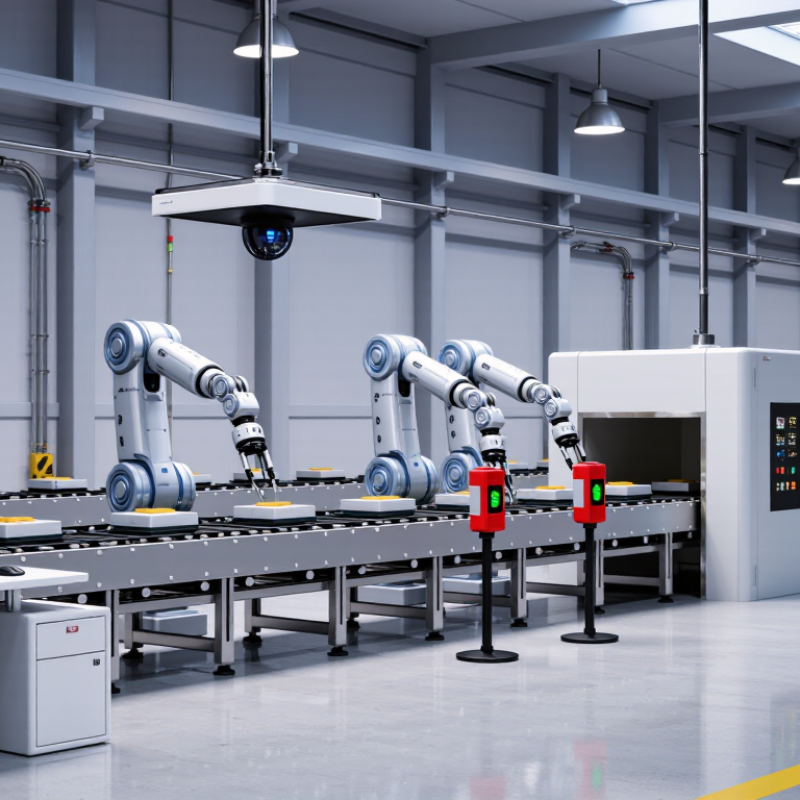
In 2026, global buyers will evaluate automation and controls through measurable performance, not impressive slogans. Energy use, cybersecurity, integration time, and service access now influence purchasing decisions. A modern production line may include robots, programmable logic controllers, machine vision, safety systems, and cloud dashboards. Each component must communicate reliably. One weak connection can stop an entire shift.

The International Federation of Robotics reported 541,302 industrial robots were installed worldwide in 2023. More than 4.28 million industrial robots were operating globally. These figures show sustained investment, but they do not guarantee successful automation. Deloitte’s 2024 Smart Manufacturing and Operations Survey found that 86% of manufacturers expect smart manufacturing to become a major competitiveness driver within one or two years. Buyers still need evidence. A polished demonstration is not enough.

The best automation and controls solutions should match production volume, workforce skills, plant conditions, and long-term maintenance capacity. For example, a food-processing facility may prioritize washdown-rated equipment and rapid changeovers. An automotive plant may require precise motion control and traceability across thousands of parts. Regional standards and local technical support also matter. Cheap hardware can become expensive downtime.

This guide compares practical technologies for global buyers. It considers total ownership cost, interoperability, safety, scalability, supplier reliability, and documented field experience. Some decisions remain uncomfortable. No platform is perfect. The right choice depends on disciplined testing, honest risk assessment, and clear operational goals.

2026 Best Automation and Controls for Global Buyers

What Automation and Control Systems Include in 2026

In 2026, automation and control systems extend beyond machines and basic PLC logic. They combine sensors, motion controllers, robots, machine vision, SCADA, MES, and industrial networks. Edge computers process production data near the equipment. Cloud platforms support wider analysis and remote collaboration. Digital twins can test changes before engineers interrupt a real production line.

The 2024 World Robotics report recorded 541,302 new industrial robot installations worldwide in 2023. This growth increases demand for coordinated control, safer motion, and measurable energy use. The 2024 State of Smart Manufacturing survey reported that 95% of manufacturers had invested in, or planned to invest in, artificial intelligence and machine learning. However, intelligent software still depends on clean data. A poorly calibrated sensor can produce a confident but wrong decision. That weakness deserves more attention.

Tips: Specify open communication standards, clear cybersecurity roles, and documented backup procedures. Check sensor accuracy before buying advanced analytics. Test safety functions under realistic fault conditions. Review energy dashboards against utility meters. IEC 62443 guidance can support industrial cybersecurity planning, while ISO 13849 helps structure machinery safety controls. Smaller factories may need a staged upgrade, not a costly full replacement. Performance targets should include downtime, scrap, response time, and operator workload. Human judgment remains necessary.

2026 Best Automation and Controls for Global Buyers

What Automation and Control Systems Include in 2026

Modern automation and control systems typically combine field devices, PLC or PAC controllers, motion control, HMI and SCADA platforms, and higher-level MES or ERP integration. The chart shows representative engineering update intervals: lower values indicate faster control activity, while higher values reflect supervisory and business-level data exchange. Actual timing depends on the process, network, safety requirements, and system design.

Key Technologies Shaping Modern Industrial Automation

2026 Best Automation and Controls for Global Buyers

Key technologies are reshaping modern industrial automation. Smart sensors now capture temperature, vibration, pressure, and energy data at the machine level. Industrial Ethernet moves this information quickly between controllers, robots, and production software. Edge computing then filters critical signals near the equipment. This reduces delays and supports faster maintenance decisions.

Machine vision improves inspection accuracy on busy production lines. Digital twins help engineers test process changes before touching physical equipment. However, a digital twin can mislead when its data is incomplete. No system is perfect. Strong cybersecurity is also essential. Segmented networks, controlled access, and regular updates protect connected operations from avoidable disruptions. These measures should support safety, not merely satisfy an audit.

Tips: Define measurable goals before selecting equipment. Check data compatibility, response time, training needs, and service availability. Test one production cell first. Keep operators involved. They often notice practical problems that software dashboards miss. Review results honestly after deployment, because early assumptions may prove wrong. A reliable automation plan balances productivity, worker safety, maintenance skills, and long-term operating costs.

How to Evaluate Automation Solutions for Global Operations

Evaluating automation solutions for global operations requires more than comparing speed or purchase price. A strong review starts with the process itself. Map each task, operator decision, sensor input, and failure response. A packaging line may run well in one factory but struggle with dust, voltage changes, or limited technical support elsewhere. Small details matter.

Ask suppliers for documented performance data, maintenance intervals, cybersecurity controls, and training plans. Request evidence from similar operating environments, not polished laboratory demonstrations. Check whether the system supports local languages, regional electrical standards, and secure remote access. Operators should understand alarms within seconds. Technicians should replace common parts without waiting weeks for overseas shipments. Total cost includes integration, software updates, spare parts, downtime, and staff development.

A controlled pilot can expose uncomfortable assumptions. Our experience shows that impressive cycle times may hide difficult changeovers or excessive manual checks. That is easy to miss. Measure production output, energy use, error rates, recovery time, and operator feedback during several shifts. Keep an audit trail for every test and decision. Independent technical review adds credibility, especially when performance claims remain incomplete. No solution is perfect, and missing data should be recorded rather than quietly estimated. A practical choice balances measurable performance with local resilience, safe operation, and support that remains available after installation.

Leading Application Areas Across Manufacturing and Infrastructure

2026 Best Automation and Controls for Global Buyers

Leading application areas across manufacturing and infrastructure are becoming more measurable, not simply more automated. The International Federation of Robotics recorded 541,302 industrial robot installations in 2023. That volume shows strong demand, yet it also exposes a practical issue: buyers need controls that fit real production conditions. A packaging line may require fast vision checks, while a metal plant needs vibration monitoring and safer motion control. One solution rarely fits both.

Energy management is equally important. The International Energy Agency reports that industry used about 37% of global final energy in 2022. Therefore, variable-speed drives, intelligent sensors, and power-quality monitoring can support lower operating costs. In water treatment, controls can adjust pumps when flow changes. In logistics hubs, they can coordinate conveyors, scanners, and emergency stops. Small details matter.

Infrastructure projects also need resilient automation. Remote substations, tunnels, and pumping stations may face dust, heat, unstable networks, or limited maintenance access. Edge processing can keep essential functions running during communication loss. The calculation is rarely perfect. Engineers may overestimate software benefits and underestimate sensor placement. A poorly positioned sensor still produces confident-looking data. Buyers should test interoperability, cybersecurity, spare-part access, and technician training before expanding across multiple sites.

Global Buying Factors: Standards, Integration, Support, and Cost

2026 Best Automation and Controls for Global Buyers

Global buyers now judge automation beyond purchase price. Standards and integration determine whether equipment performs inside a real factory. IEC 61131-3 programming, ISO 13849 safety design, and OPC UA connectivity can reduce compatibility risks. The International Federation of Robotics reported 541,302 industrial robots were installed worldwide in 2023. That growth increases pressure for reliable data exchange and scalable controls. Still, standards alone cannot fix poor commissioning.

Integration should be tested with actual production signals, not only a polished demonstration. Check cycle time, alarm handling, network recovery, and data ownership. Deloitte’s 2024 Smart Manufacturing and Operations Survey found 86% of manufacturers expect smart manufacturing to become a major competitiveness driver within five years. Support matters just as much. Buyers should request response targets, remote diagnostic procedures, local training, and spare-part availability. A distant expert may be highly qualified, but a three-day delay can stop a production cell. That detail is easy to underestimate.

Tips: Compare total cost over five years, including engineering, licenses, energy, maintenance, training, and downtime. Ask for a sample bill of materials and a documented integration plan. The cheapest quotation can still be the most expensive decision. An imperfect requirement list is normal, but leaving it unchanged is risky. Recheck assumptions with operators, electricians, and safety specialists before approval.

2026 Best Automation and Controls for Global Buyers - Global Buying Factors: Standards, Integration, Support, and Cost

A company-neutral comparison of common industrial automation and control solution categories for international purchasing decisions.

Automation or Control Category Typical Applications Relevant International Standards and Protocols Integration Characteristics Cybersecurity and Safety Considerations Global Support Requirements Indicative Budget Range (USD) Key Global Buying Factors
Compact PLC-Based Control Small machines, packaging equipment, conveyors, pumps, compressors, and basic process skids. IEC 61131-3 Modbus TCP EtherNet/IP PROFINET Usually integrates with digital and analog I/O, variable-speed drives, HMIs, and remote I/O. Expansion is limited by the controller and I/O architecture. Apply network segmentation, password control, secure configuration backup, and appropriate machine risk assessment. Safety functions may require separate safety-rated components. High availability in most industrial regions; local programming and commissioning capability is important. $2,000–$15,000 for controller, I/O, basic HMI, and control-panel components, excluding installation. Protocol compatibility, I/O capacity, environmental rating, spare-part availability, programming-tool access, and training requirements.
Modular PLC or PAC System High-speed machinery, production lines, material handling, motion control, and multi-station manufacturing systems. IEC 61131-3 OPC UA MQTT PROFINET EtherCAT Supports distributed I/O, motion axes, recipe management, machine-to-machine communication, historian connectivity, and enterprise data exchange. Use IEC 62443-oriented security practices, role-based access, signed or controlled software changes, network zoning, and validated safety functions where required. High availability, but advanced troubleshooting often requires certified system integrators or trained engineering teams. $10,000–$75,000 for a typical control system, excluding large-scale machine integration and installation. Motion performance, engineering software licensing, interoperability, lifecycle management, remote diagnostics, and availability of qualified integrators.
Distributed Control System Continuous and batch processing in chemical, pharmaceutical, power, water, food, and other process industries. IEC 61131-3 OPC UA ISA-88 ISA-95 IEC 62443 Designed for large numbers of process loops, centralized operator stations, alarm management, historical data, redundancy, and plant-wide control. Requires formal cybersecurity governance, secure remote access, alarm management, functional safety assessment where applicable, and documented change control. Specialist support is normally required for architecture, migration, validation, and lifecycle services. $100,000–$1,000,000+ for a plant-level project, depending on I/O count, redundancy, validation, and field-instrument scope. Process availability, redundancy, migration path, regulatory validation, alarm philosophy, long-term service coverage, and local engineering capability.
SCADA and HMI Platform Supervisory monitoring, data acquisition, utility systems, water networks, building services, remote assets, and production visualization. OPC UA Modbus TCP MQTT IEC 62443 ISA-95 Connects PLCs, RTUs, meters, databases, historians, dashboards, and business systems. Open interfaces are important for multi-vendor environments. Implement least-privilege access, application allowlisting, secure remote access, backup procedures, patch governance, and separation between operational and corporate networks. Broad support availability; specialist support is recommended for redundant, geographically distributed, or regulated systems. $15,000–$250,000 for software, servers, engineering, and a moderate deployment, excluding extensive field upgrades. Licensing model, tag limits, redundancy, web access, historian functions, reporting, language support, database connectivity, and cybersecurity controls.
Industrial Robot Cell Assembly, welding, palletizing, machine tending, packaging, painting, inspection, and repetitive material handling. ISO 10218 ISO/TS 15066 ISO 13849-1 IEC 62061 IEC 60204-1 Usually integrates a robot controller with PLCs, safety systems, vision equipment, tooling, conveyors, drives, and manufacturing execution systems. Conduct a documented risk assessment, validate protective measures, control access to teach mode, and verify safety functions before production use. Specialist support is generally needed for cell design, programming, safety validation, tooling, and production ramp-up. $75,000–$300,000 for a typical integrated cell, depending on robot payload, tooling, vision, safety, and material-handling requirements. Payload and reach, cycle time, application validation, guarding, spare parts, operator training, local service response, and tooling compatibility.
Safety Instrumented and Machine Safety Control Emergency stop systems, guard monitoring, burner management, process shutdown, overspeed protection, and hazardous-operation risk reduction. IEC 61508 IEC 61511 ISO 13849-1 IEC 62061 IEC 60204-1 May be integrated into a safety PLC architecture or implemented as dedicated safety instruments and relays. Independence and proof-test requirements must be considered. Requires formal hazard analysis, safety integrity or performance-level determination, validation, documented proof testing, and controlled modifications. Specialist and qualified safety support is essential for design, validation, commissioning, and periodic assessment. $5,000–$100,000+ depending on the number of safety functions, required redundancy, sensors, final elements, and validation scope. Required safety level, certification evidence, diagnostic coverage, proof-test interval, documentation, lifecycle responsibility, and local competence.
Industrial Edge Gateway and IIoT Platform Condition monitoring, asset connectivity, energy monitoring, production data collection, predictive maintenance, and cloud or enterprise integration. OPC UA MQTT Modbus TCP IEC 62443 TLS Provides protocol conversion, local data filtering, buffering, analytics, API access, and secure transfer between operational technology and IT systems. Use certificate management, encrypted communications, secure boot where available, device hardening, access control, update management, and network segmentation. Medium to high support needs depending on cloud connectivity, device count, analytics, and data-governance requirements. $500–$10,000 per site or gateway deployment, plus software subscriptions, connectivity, engineering, and cloud-service costs. Data ownership, offline operation, protocol support, cybersecurity updates, subscription terms, API openness, scalability, and integration with existing controls.
Variable-Speed Drive and Motor Control System Pumps, fans, compressors, conveyors, mixers, extruders, hoists, and energy-efficient motor applications. IEC 61800 IEC 60204-1 Modbus PROFINET EtherNet/IP Integrates with PLCs, safety circuits, motor protection, process instruments, and plant networks. Performance depends on motor, drive, cabling, and control-loop selection. Consider functional safety options, electromagnetic compatibility, thermal protection, secure configuration access, and appropriate electrical installation practices. High availability; commissioning support is valuable for harmonics, tuning, motor compatibility, and application-specific faults. $500–$25,000 per drive and associated control equipment, depending on power rating, enclosure, braking, filtering, and safety requirements. Voltage and power range, motor compatibility, efficiency, harmonics, environmental rating, communication options, spare parts, and commissioning capability.
Cost note: Budget ranges are indicative 2026 planning estimates for typical equipment or project packages in USD. Actual prices vary by region, exchange rate, electrical specifications, engineering scope, installation, validation, software licensing, taxes, duties, training, and after-sales service. Standards listed are international references; the applicable edition and local legal requirements should be verified before procurement.