What Are the Best Automation Systems from China?
China has become a major force in industrial automation, supported by rapid factory investment and expanding engineering capability. The International Federation of Robotics reported 276,288 industrial robot installations in China during 2023. That figure represented more than half of global installations. China also reached approximately 470 robots per 10,000 manufacturing employees, according to the IFR’s World Robotics 2024 report.
These figures explain why buyers increasingly examine Chinese automation systems for assembly, packaging, welding, warehousing, and quality inspection. However, installation volume does not automatically prove technical superiority. A reliable evaluation must consider repeatability, cycle time, software compatibility, maintenance response, operator training, and total ownership cost. Safety also matters. Buyers should review relevant requirements, including ISO 10218 for industrial robot safety and IEC 62443 principles for connected control systems.
The World Economic Forum’s Future of Jobs Report 2023 identifies robotics and autonomous systems as important technologies reshaping production. Chinese suppliers are responding with integrated robots, machine vision, programmable logic controllers, and digital monitoring platforms. Some provide impressive demonstrations: a robotic arm placing components within seconds, or a vision camera rejecting one defective package on a fast conveyor.
Yet comparisons are not always clean. Vendor specifications may use different testing conditions. Local service quality can vary between regions. Some software ecosystems still feel less mature than expected. Therefore, this guide examines the best automation systems from China through practical evidence, not marketing language. It considers performance, integration, safety, scalability, and long-term support for international buyers.
What Defines an Automation System from China?
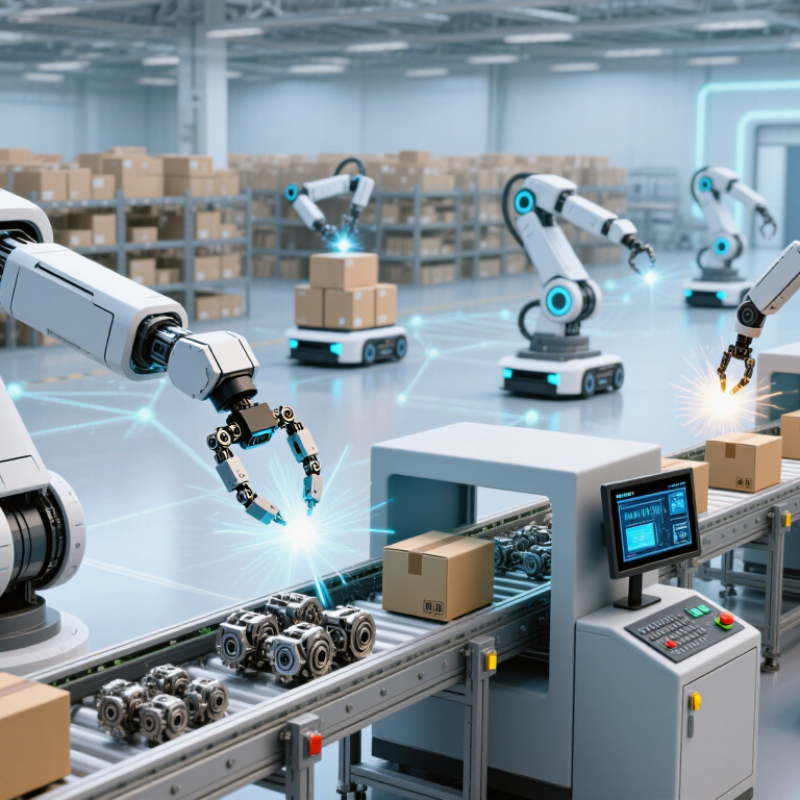
An automation system from China is defined by more than its place of assembly. It reflects a practical combination of control hardware, software, sensors, robotics, and production data. In factory projects, I look for how these parts communicate during a real production cycle. A controller may coordinate a conveyor, vision camera, pneumatic gripper, and quality alarm. The useful question is simple: can operators understand and maintain the system?
Chinese automation systems often emphasize fast customization and efficient equipment integration. Engineers may adapt a standard module for unusual product sizes, short changeovers, or limited factory space. A well-designed system includes clear wiring, documented parameters, remote diagnostics, and accessible spare parts. It should also support recognized safety practices, risk assessment, emergency stops, guarding, and traceable software changes. Local engineering teams can shorten commissioning because they understand nearby suppliers and manufacturing conditions. That advantage matters.
However, low price alone does not define quality. A cheaper quotation can hide weak documentation, unstable communication, or difficult service after installation. I have learned that a smooth demonstration proves very little. Test the system with imperfect materials, repeated shifts, dust, vibration, and operator mistakes. Ask for cycle-time records and maintenance procedures. Some systems still need better English manuals and more consistent cybersecurity controls. That weakness deserves honest attention. The strongest systems combine practical engineering, measurable reliability, and willingness to improve, rather than claiming perfection.
What Are the Best Automation Systems from China?
China’s automation capability is reflected in the rapid growth of industrial robot density. Higher robot density indicates broader adoption of automated production, machine control, material handling, and quality processes.
Definition: Robot density measures the number of operational industrial robots per 10,000 manufacturing workers. Effective automation systems typically combine robotics, programmable control, sensing, software integration, safety functions, and data monitoring.
Source: International Federation of Robotics, World Robotics reports. Values shown: 2020–2023.
Which Types of Chinese Automation Systems Are Available?
Chinese automation systems cover a wide range of factory and logistics needs. Industrial robotic arms handle welding, palletizing, assembly, and repetitive material movement. Collaborative robots support lighter tasks near trained workers. They often include force sensors and adjustable speed settings.
Machine vision systems inspect product shape, color, labels, and surface defects. A typical line may use cameras above a conveyor, with software rejecting damaged parts automatically. Programmable logic controllers coordinate motors, sensors, valves, and emergency stops. Supervisory control systems then display production data on a central screen.
Warehouse automation is another growing category. Automated guided vehicles follow marked routes, while autonomous mobile robots use sensors to navigate changing spaces. Automated storage systems manage bins, cartons, and picking stations. Packaging machines can fill, seal, weigh, and label products with limited manual handling.
In factory assessments, I have found that integration matters more than impressive specifications. A fast robot is less useful when local technicians cannot maintain it. Request clear wiring diagrams, spare-part plans, software training, and safety documentation. Check compatibility with existing equipment and regional electrical requirements. Testing under real loads is essential. Laboratory demonstrations can mislead.
Some systems still need better communication between software platforms. That weakness deserves attention. A careful buyer should measure cycle time, error rates, maintenance access, and operator training needs before selecting a configuration.
What Industries Use Automation Systems from China?
Automation systems from China are used across industries that need speed, repeatability, and flexible production. The automotive sector remains a major user, especially for welding, painting, inspection, and battery assembly. Electronics factories rely on compact robots for circuit-board placement, testing, and screwdriving.
The International Federation of Robotics reported 276,288 industrial robot installations in China during 2023, representing about 51% of global installations.
Food, packaging, pharmaceuticals, and consumer goods also use Chinese automation systems. Vision cameras can inspect labels, seals, and product defects on fast-moving lines. Collaborative robots support picking, palletizing, and machine tending in smaller facilities. In logistics, automated storage systems move cartons between shelves and dispatch areas with fewer manual touches.
The China Industrial Robot Industry Alliance has also reported strong demand from metal processing, plastics, and new-energy manufacturing. The pattern is clear. However, performance varies widely between suppliers and factory conditions.
Tips:
Match the system to your process, not only its purchase price. Check cycle time, payload, accuracy, safety functions, spare-part access, and local technical support. Request a small production trial using real materials, lighting, and operators.
A system that performs well in a showroom may struggle with dust, vibration, or changing product sizes. IFR’s 2024 data shows China’s robot density reached 470 units per 10,000 manufacturing employees in 2023. That figure signals rapid adoption, but it does not prove every project is efficient.
Human training and maintenance still matter. Fit matters more.