How to Choose the Best Mining Automation Solutions
Choosing the best mining automation solution starts with the mine, not the sales presentation. A system that performs well in a wide, stable haul road may struggle in a narrow underground drift. Dust, uneven ground, weak connectivity, and changing ore conditions all matter. So do the people who must operate and maintain the equipment. The stakes are real. Mining automation can improve consistency, reduce workers’ exposure to hazardous areas, and provide useful operational data. But it is not a quick fix. As mining engineering professor Peter Knights puts it, “Automation must fit the mine, not the other way around.” Treat that as a guiding principle, not a substitute for site-specific evidence.
This outline will help compare solutions by safety, compatibility, scalability, support, and total cost of ownership. Look closely at the details: sensor performance in dust, network coverage around a pit or tunnel, integration with existing fleet systems, and the time needed to train operators. Ask vendors for results from environments comparable to yours, including limitations and maintenance requirements. No system is magic. A polished dashboard can hide gaps in field performance, and a pilot that works on one route may not scale across a whole site. That deserves honest scrutiny. The right choice should solve a measured operational problem, fit the mine’s working conditions, and give teams a clear way to assess results before expanding deployment.
Define the Task: Match Automation to Hauling, Drilling, or Processing
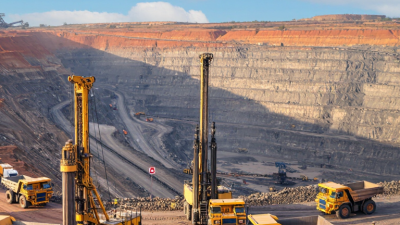
Choose automation by the constraint it must remove, not by its novelty. For hauling, map truck queues, idle minutes, road conditions, and loading delays across a full shift. If trucks wait at crushers, dispatch changes may matter more than driverless vehicles. Start small. Compare cycle time, tonnes moved, and unplanned stops before and after a controlled trial.
For drilling, focus on repeatable hole placement, operator exposure, and data quality. Specify tolerances for depth and angle, then check results against survey records. The International Energy Agency’s Global Critical Minerals Outlook 2024 reports that average copper ore grades have fallen by roughly 40% since 1990. Lower grades make accurate drilling and consistent feed preparation more consequential, but automation cannot fix a poor mine plan. That matters.
In processing, target unstable steps such as crushing, grinding, or material handling. Track throughput, energy per tonne, recovery, and downtime; one headline metric can hide a trade-off. The Global Mining Guidelines Group’s guidance on autonomous systems emphasizes planning for people, processes, and operational readiness, not just equipment. Pilot one circuit or route first. Early results may expose gaps in sensors, maintenance routines, or shift handovers rather than quick savings. That is useful evidence, though it can be uncomfortable.
Assess Safety Risks: ILO Says Mining Has 1% of Workers but 8% of Fatal Accidents
How to Choose the Best Mining Automation Solutions
The International Labour Organization (ILO) estimates that mining employs about 1% of the global workforce. Yet it accounts for roughly 8% of fatal occupational accidents, according to the ILO’s mining safety materials. The gap is stark. In the United States, the Bureau of Labor Statistics recorded a fatal injury rate of 13.0 per 100,000 full-time workers in 2022 for mining, quarrying, and oil and gas extraction combined. That broader category is not mining alone, but it shows how serious high-hazard work remains.
When comparing automation, begin with site incident records and the tasks that expose people to moving equipment, unstable ground, dust, or remote locations. Map the exposure. A remote-controlled loader may keep an operator away from a dusty heading, while collision-warning systems can alert drivers to people near blind corners. Check whether cameras, sensors, and communications work in low light, vibration, and poor connectivity. A polished demonstration is not a safety assessment.
Automation can reduce exposure, but it can also move risk to maintenance crews, control rooms, and system recovery. Not a cure. Ask how workers safely stop equipment, respond to sensor failure, and regain control after a network outage. NIOSH research on mining hazards supports evaluating controls against real operating conditions, not assumptions. Include operators and maintainers in trials; they may spot awkward interfaces that engineering teams miss. That feedback can be uncomfortable, and useful.
Check Site Readiness: Verify Connectivity, Equipment, and ISO 17757 Fit
Before choosing a mining automation solution, test connectivity across the actual work area. Walk haul roads, loading zones, and maintenance bays with the network equipment in place. Record signal strength, latency, and dropouts during busy shifts, not only during quiet hours. Maps can mislead. Test it underground, around bends, and near large metal structures.
Inventory each machine’s control systems, sensors, communication interfaces, and software versions. Check for worn connectors, unstable power, or older components that may limit data exchange. Ask operators and maintenance technicians where faults recur; their notes often reveal problems that equipment lists miss. Keep those findings. Small mismatches can delay a rollout.
Assess whether the proposed operating modes and site procedures fit the relevant ISO 17757 requirements for autonomous and semi-autonomous earth-moving machinery and mining systems. Review the current standard with qualified safety and engineering specialists; a general claim of compliance does not prove that a specific site is ready. Confirm how communication loss, obstacles, emergency stops, and manual intervention will be handled. No checklist catches every oddity, so document unresolved gaps and test them before expanding deployment.
Compare Solutions: Benchmark Uptime, Productivity, and Total Cost of Ownership
When comparing mining automation solutions, measure them against the same operating conditions. Track equipment uptime across full shifts, including delays caused by communications, sensors, and maintenance. A dashboard showing 98% availability may hide repeated short stoppages that disrupt a haulage cycle. Numbers can mislead.
Benchmark productivity using practical measures, such as tonnes moved per operating hour, cycle time, and operator interventions. Compare similar routes, payloads, and shift conditions; otherwise, a richer ore zone or shorter haul can make one system look better than it is. Keep a record of manual overrides, too. They often reveal where automation still needs adjustment.
Total cost of ownership goes beyond purchase price. Include installation, network upgrades, staff training, spare parts, software support, and planned downtime over the expected service life. Ask for assumptions behind vendor projections, then test them in a controlled pilot with a clear baseline. That matters. The pilot may not reflect every season or site condition, so leave room for uncertainty. A simple cost-per-tonne comparison, updated with actual maintenance and productivity data, gives decision-makers a more dependable basis for choosing.
How to Choose the Best Mining Automation Solutions
Compare solution types using uptime, productivity, and total cost of ownership (TCO).
Illustrative planning scenario, not measured vendor data. Productivity and TCO are indexed to a conventional operation (100); higher productivity and lower TCO are preferable. Uptime is shown as a percentage. Actual results vary by mine, equipment, operating conditions, and implementation.
Pilot Before Scaling: Track Safety, Availability, and Output Against Baselines
A mining automation pilot should test performance against a documented baseline, not a polished demonstration. Record equipment availability, tonnes moved per operating hour, downtime causes, and safety indicators before deployment. Include near misses and exposure hours; injury counts alone can hide early warning signs. The International Labour Organization’s mining safety guidance notes that mining accounts for about 8% of fatal occupational accidents while employing roughly 1% of the global workforce. That broad estimate is not a site-level forecast, but it underscores why safety must be measured alongside output.
Run the pilot across representative shifts, crews, and weather conditions. Compare like with like: ore type, haul distance, and planned maintenance can all change results. Set clear thresholds before the trial, then review weekly logs with operators and maintenance staff. A dashboard may show higher availability while concealing repeated sensor faults. Small samples mislead. If output rises but fatigue, near misses, or unscheduled stops also rise, pause and investigate rather than scaling on a single headline metric. The baseline may be imperfect; document its gaps instead of pretending otherwise.
Tips: Keep a control area where practical. Track both planned and unplanned downtime, and note every change in shift conditions. Recheck results after the initial excitement fades.