How to Choose a PLC Control Panel in 2026?

Choosing a plc control panel in 2026 requires more than comparing enclosure prices or touchscreen sizes. The right panel must match the machine, workplace, operators, and future maintenance plan. Modern systems may combine PLCs, remote I/O, safety relays, variable-frequency drives, industrial Ethernet, and secure data access. Each device adds capability, but also adds wiring, heat, diagnostics, and possible failure points. A clean-looking cabinet is not automatically a dependable one.

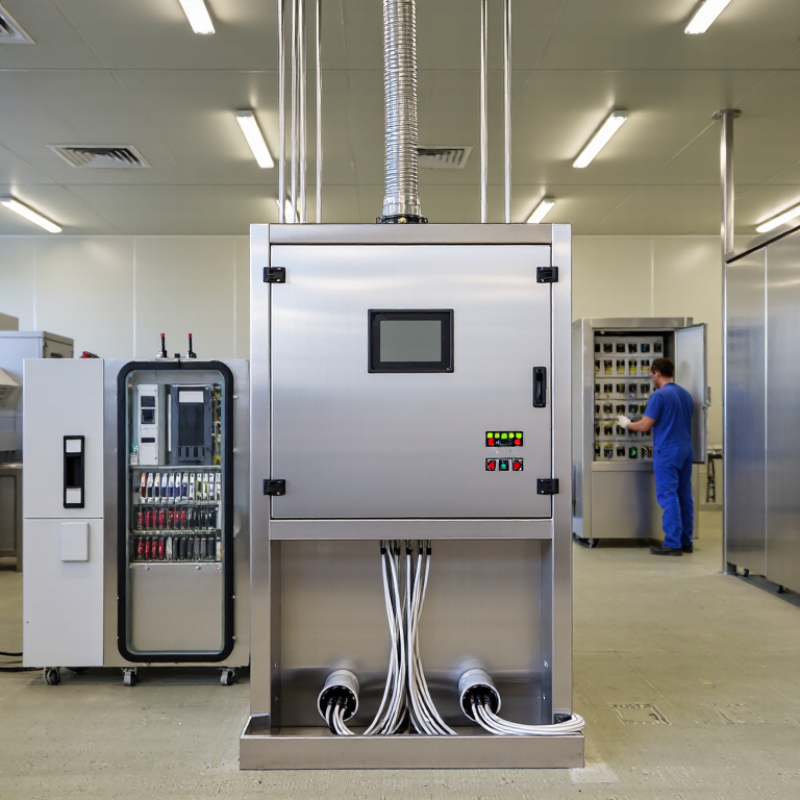
Real-world selection starts with the operating environment. A food-processing line may need stainless steel construction, washdown protection, and careful cable routing. A dusty workshop may require stronger sealing and filtered cooling. Temperature, vibration, humidity, available voltage, short-circuit ratings, and installation space deserve measured attention. Confirm the PLC’s processing capacity and expansion options before the design becomes fixed. Check whether technicians can replace a failed module without removing half the panel. Small details matter.

Safety and cybersecurity should shape the decision, not decorate it afterward. Review emergency-stop architecture, access control, network segmentation, backup procedures, and software support with qualified engineers. Use recognized technical standards and documented test procedures where applicable. A supplier’s references can reveal more than a glossy brochure. Still, no checklist is perfect. Actual production conditions often expose assumptions made in the design office. The most reliable choice balances present performance with future serviceability, spare-part availability, and clear documentation. It should be powerful enough for the process, but not unnecessarily complicated. That judgment deserves challenge.
How to Choose a PLC Control Panel in 2026?

PLC Control Panel Basics and Its Role in Industrial Automation

How to Choose a PLC Control Panel in 2026?

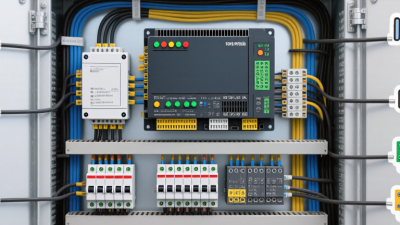
A PLC control panel is the working center of an automated machine. It receives signals from sensors, processes programmed logic, and controls motors, valves, heaters, or actuators. Inside, you may find a PLC CPU, power supply, input and output modules, circuit protection, relays, and communication equipment. The panel turns field conditions into controlled actions. It also records faults, which helps technicians locate problems faster.

Selection should begin with the process, not the enclosure appearance. Count every digital and analog signal, then allow room for future expansion. Check voltage levels, operating temperature, humidity, dust, and available cabinet space. A suitable enclosure protects components from harsh factory conditions. Poor heat management can shorten component life, even when the PLC program is correct. Network capacity also matters when the system connects to drives, remote I/O, or monitoring software.

In practical installations, clear wiring labels save more time than impressive graphics. Leave enough space for testing and replacement. Safety circuits should remain independent where risk assessment requires it. Choose a control panel with accessible terminals, reliable diagnostics, and documented electrical drawings. Standards and local regulations must guide the final design. I have seen panels that worked well but were difficult to maintain because every wire was tightly packed. That mistake is easy to repeat. A cheaper panel may also create higher service costs later. Performance, maintainability, and verified protection deserve equal attention.

How to Choose a PLC Control Panel in 2026? - PLC Control Panel Basics and Its Role in Industrial Automation

Application Profile Typical PLC Class Recommended I/O Capacity Typical Scan-Time Target Recommended Panel Rating Communication Requirements Safety and Expansion Considerations
Small standalone machine
Simple sequencing, conveyors, pumps, or packaging equipment
Compact PLC with integrated CPU and basic I/O Up to 64 digital I/O; 4–16 analog channels when required Approximately 10–50 ms IP54 for clean indoor areas; IP65 near dust or water spray Ethernet for programming, HMI access, and basic diagnostics Leave at least 20% spare I/O and panel space for future changes
Medium machine or process skid
Multiple motors, valves, sensors, and operator stations
Modular PLC with expandable local and remote I/O 64–512 digital I/O; 8–64 analog channels Approximately 5–25 ms IP54–IP65, with filtered ventilation or climate control as needed Industrial Ethernet, remote I/O networking, HMI, drives, and supervisory system connectivity Use separate protective circuits for controls, actuators, and high-power loads
Large production line
Coordinated machines, high I/O density, and continuous operation
High-performance modular PLC or distributed control architecture More than 512 digital I/O; 64 or more analog channels where required Approximately 1–10 ms for time-critical sections IP54 indoors; higher enclosure protection or segregated cabinets for harsh areas Redundant or ring-based industrial networks, remote I/O, motion, drives, HMI, and plant systems Consider CPU redundancy, network redundancy, spare power capacity, and maintainability
High-speed motion system
Servo axes, synchronized motion, robotics, or precision positioning
Motion-capable PLC with deterministic control functions Based on axis count; commonly 8–64 coordinated axes plus machine I/O Approximately 0.5–5 ms for motion-related tasks IP54 or higher, with controlled temperature and low electrical noise Deterministic industrial network, encoder feedback, servo interfaces, and time synchronization Separate power and signal wiring; use shielding and grounding practices suitable for motion systems
Safety-critical machinery
Emergency stops, guards, light curtains, and safe motion functions
Safety PLC or PLC paired with a certified safety controller Determined by the risk assessment and number of safety devices Must meet the validated safety response-time requirement Selected according to the installation environment and safety-system design Safety-rated communication where required, plus standard control networking Design according to applicable machinery risk assessments and functional-safety standards
Outdoor or harsh environment
High humidity, dust, vibration, corrosive agents, or temperature variation
Industrial PLC with environmentally rated remote I/O where practical Sized according to field devices, with local expansion for shorter cable runs Usually 10–50 ms unless the process requires faster control IP65–IP66 or application-specific protection; manage condensation and heat dissipation Industrial Ethernet or fiber where distance, lightning, or electromagnetic interference is a concern Use corrosion-resistant hardware, surge protection, proper grounding, and environmental monitoring
Selection checkpoints: Confirm the required I/O type and quantity, control-cycle time, network architecture, enclosure protection, power budget, safety level, spare capacity, maintenance access, and expected operating conditions before finalizing the PLC control panel design.

Define Your Control Requirements and Operating Conditions

How to Choose a PLC Control Panel in 2026?

Define your control requirements before comparing panel designs. List every machine function, sensor, actuator, and safety signal. Identify required input and output types, including digital, analog, pulse, and communication points. Estimate processing speed from real machine behavior, not sales descriptions. A conveyor may look simple, yet timing errors can damage products or stop production.

Operating conditions matter just as much. Record ambient temperature, humidity, dust, vibration, and available electrical supply. A hot enclosure may need ventilation, cooling, or more internal spacing. Check the enclosure protection level for the installation area. Also consider short-circuit capacity, grounding, cable entry, and maintenance access. Leave space for future expansion. I have seen compact panels become difficult to service because every terminal was packed tightly. That design was efficient on paper, but frustrating in practice.

Tips: Create a load schedule with real measurements. Test the highest expected temperature, not the average. Reserve spare inputs, outputs, terminals, and network capacity. Ask a qualified control engineer to review the design. Do not ignore cleaning routines or operator access. A written requirement is useful, but it can still be incomplete. Revisit it after observing the machine during a full production cycle.

How to Choose a PLC Control Panel in 2026?

Define your control requirements and operating conditions before selecting the PLC, enclosure, cooling method, and protection level.

The chart shows typical ambient temperature envelopes used when defining PLC control-panel requirements. Standard industrial PLC environments commonly target approximately 0–55 °C, while outdoor, washdown, and extended-temperature installations may require wider limits, thermal management, and appropriately rated enclosures. Confirm the actual PLC, power supply, battery, display, and network-device specifications before finalizing the panel design.

Reference basis: IEC 61131-2 environmental guidance and common industrial control-panel design practice. Actual limits depend on the selected equipment and installation conditions.

Compare PLC Types, I/O Capacity, and Expansion Options

How to Choose a PLC Control Panel in 2026?

Choosing a PLC control panel starts with the machine’s actual workload. Compact PLCs suit small skids, conveyors, and panels with fewer than 32 points. Modular PLCs provide flexible digital, analog, and communication modules. Rack-based systems fit larger lines requiring hundreds of points and faster processing.

MarketsandMarkets’ 2024 PLC report valued the global market at approximately 11.3 billion dollars. It forecasts growth to about 15.3 billion dollars by 2029. That growth reflects wider automation adoption, not permission to oversize every panel.

Count present I/O carefully, then add realistic headroom. A useful field practice is 20–30% spare capacity for sensors, valves, and future diagnostics. Check whether expansion modules support the required voltage, signal type, network, and installation temperature.

A panel with 24 digital inputs may look sufficient. It becomes inadequate after adding safety devices, alarms, and maintenance switches. I have seen neat spreadsheets fail because one analog channel was counted twice. Recheck the wiring schedule.

ARC Advisory Group’s industrial automation research continues to emphasize modular architectures and connected control systems. Therefore, expansion should include communication capacity, not only terminal space. Leave DIN-rail room, cable bend space, and power-supply margin.

Small details matter.

A practical trial with one spare module can expose addressing and noise problems before commissioning. My own preference is not always the cheapest panel. It is the panel that can grow without forcing a full replacement.

Evaluate Safety, Communication, Power, and Enclosure Features

Choosing a PLC control panel in 2026 requires more than checking processor speed. Safety, communication, power quality, and enclosure design must work together. A fast controller is still a poor choice if technicians cannot isolate it safely. Check emergency-stop circuits, protective devices, grounding points, and clear terminal labeling. Safety functions should be documented, tested, and easy to inspect.

Communication deserves practical attention. Confirm support for the plant’s existing industrial networks, remote I/O, and diagnostic tools. Ask how the panel handles lost connections and corrupted data. Clear fault messages can reduce troubleshooting time. Avoid adding protocols merely because they are available. Keep it simple. A maintenance electrician should identify a network fault without guessing.

Power design often reveals the panel’s real quality. Review voltage tolerance, short-circuit protection, heat generation, and spare capacity. Measure expected current, then allow room for expansion. Enclosure selection also matters. Choose suitable ingress protection for dust, water, oil mist, and washdown conditions. Check ventilation, cable entries, door clearance, and internal temperature. A sealed enclosure may protect against moisture but trap heat. That trade-off is easy to overlook. In field reviews, teams sometimes prioritize a compact cabinet and regret the cramped wiring later. I still consider that a useful warning: specifications look precise, but installation conditions can be messy. Verify applicable local electrical requirements before approval.

Verify Compliance, Lifecycle Support, and Total Ownership Cost

How to Choose a PLC Control Panel in 2026?

A low purchase price can hide serious ownership costs. In commissioning reviews, missing test records often create weeks of avoidable delay. Verify compliance before comparing quotations. Request IEC 60204-1 documentation, IEC 61439 assembly verification, electrical schematics, thermal calculations, and short-circuit ratings. For connected systems, assess IEC 62443-based cybersecurity practices. Deloitte’s 2023 Global Smart Manufacturing Survey reported that 86% of manufacturers considered smart manufacturing a major priority. That priority requires documented engineering, not only modern hardware.

Lifecycle support deserves equal attention. Ask how long spare modules, firmware updates, engineering files, and technical assistance will remain available. Check whether replacement parts can be stocked locally. Uptime Institute’s 2024 Global Data Center Survey found that 54% of reported outages cost more than $100,000. Industrial downtime may differ, but the warning is practical: a small unavailable component can stop a large process.

Calculate total ownership cost across installation, training, energy use, preventive maintenance, cybersecurity updates, and eventual replacement. I have seen buyers underestimate panel ventilation and software migration. That is an expensive oversight.

Tips:

  • Build a five-year cost model.
  • Include two spare critical modules.
  • Ask for a sample FAT checklist.
  • Confirm remote support response times.
  • Review the panel’s heat load at peak production, not average load.

One uncomfortable question remains: can your maintenance team troubleshoot it at 2 a.m.? If not, the panel may be technically compliant but operationally weak.